Before the artists, Tribeca sold cloth.
In December 2022, two brothers, Ron and Alan Katz, put their building on Walker Street up for sale. A third brother, Stevie, had died the year before. They had been coming to the same office for about fifty years. Their grandfather started the company in the 1930s. Their father ran it after him. They were, by then, the last textile wholesalers in Tribeca, and the building they were selling was an 1868 cast-iron warehouse that runs through the block from 34 Walker to 309 Church.
They asked $15.9 million.
A friend had put it to them plainly a while earlier. They owned, he said, the most expensive warehouse in New York City.
That sentence is the whole history of this neighborhood in one line. To understand how a family of cloth merchants ended up sitting on eight figures of Tribeca real estate, you have to go back about a hundred and seventy years, to when these streets were not a place people lived. They were a place cloth was sold.
The marketplace
The Erie Canal opened in 1825 and made New York the country's dominant port. Goods moved between the American interior, the harbor and the world through this city, and the merchants who handled them needed somewhere to work. By the 1850s the dry goods trade was pushing north and west out of the old commercial district, into the streets around lower Broadway. Worth. Thomas. Duane. White. Walker. Church.
The architecture followed the money, and it followed it fast. Merchants needed to receive, display and store enormous quantities of merchandise, so developers built store-and-loft buildings: wide storefronts, huge windows, high ceilings, deep open floors, freight elevators, heavy floor loads. Cast iron made the big windows possible, which mattered enormously in a business where a buyer had to judge the color and weave of a fabric by eye, in daylight, before writing an order.
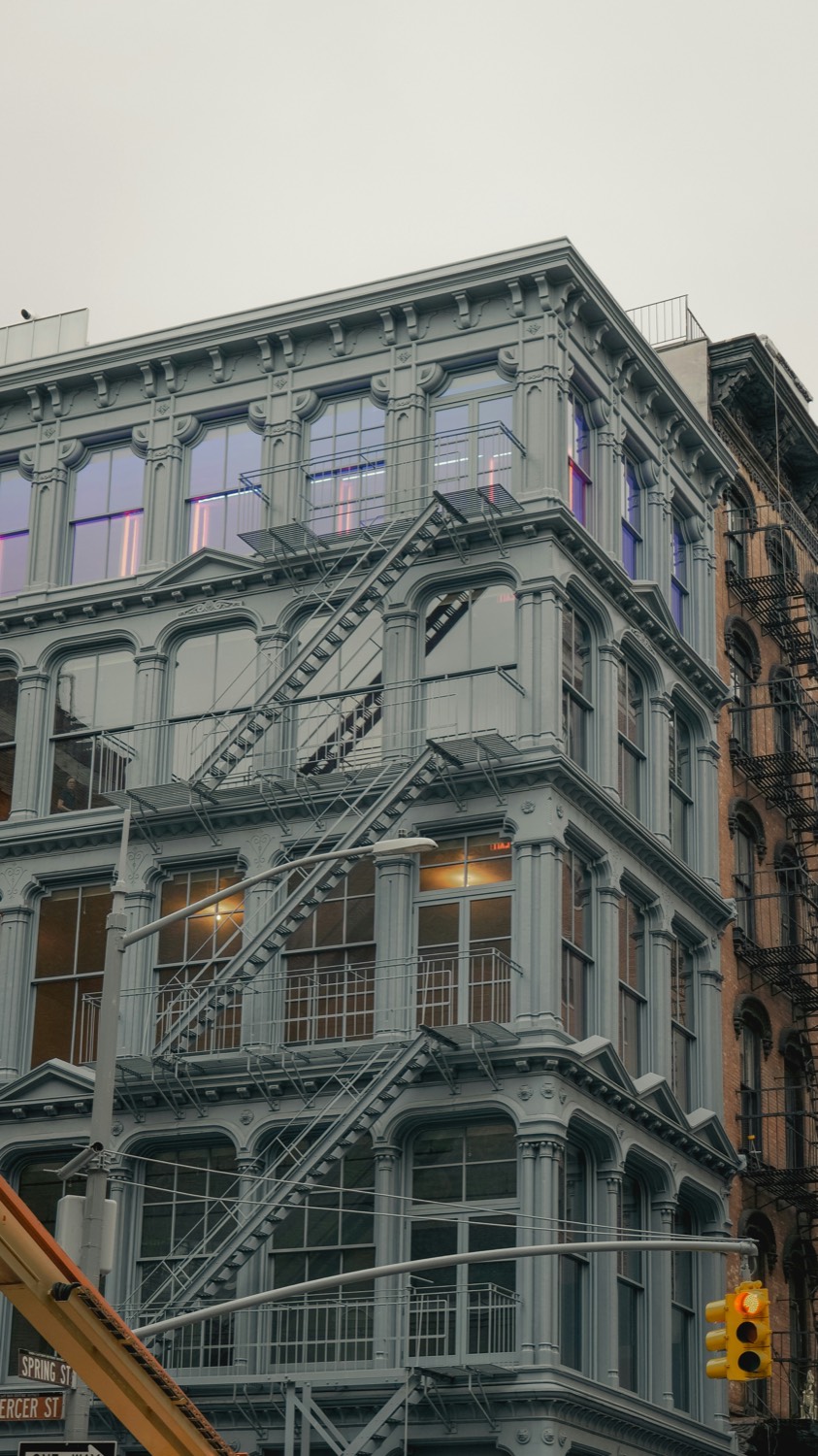
These buildings were not designed to be beautiful, and they were certainly not designed to be lived in. They were machines for wholesale commerce.
The scale is hard to picture now. H.B. Claflin & Co. moved onto Worth Street in 1861 and eventually occupied essentially the entire south side of the block between Church Street and West Broadway. Something like 48,000 square feet. Roughly 700 employees, rising toward a thousand in a busy season. Contemporary accounts called it the largest wholesale warehouse in the United States.
Claflin did not make cloth. It was an intermediary, connecting mills around the country to thousands of retailers. That was what this district was: a physical marketplace where the American textile business met itself. Fabric came in. Buyers came in. Salesmen represented mills. Jobbers bought in quantity. Orders were written, samples carried from office to office, and drays filled the street hauling goods in and out.
What they actually did here
When people hear "textile district" they picture sewing machines. Some of that was here. Most of it was not.
The businesses on these blocks were mill sales offices, importers, converters, commission merchants, wholesalers, jobbers, distributors and merchants of every kind. A jobber bought goods from manufacturers and resold them to retailers and smaller businesses. A converter bought greige cloth and had it dyed and finished. A mill agent sold, on commission, the output of a mill in South Carolina or New England that he might rarely visit.
The cloth itself was often made hundreds of miles away. Tribeca was the commercial brain of the operation, not the factory floor. That distinction matters, because it explains something that otherwise looks strange: this neighborhood could lose its textile business while American textile manufacturing was still perfectly healthy. What left first was not production. It was the reason for everyone to be standing on the same six blocks.
Concentration was the entire product. A buyer could arrive from Ohio, walk a few blocks, meet dozens of suppliers, handle the goods, negotiate, and have the merchandise shipped from a warehouse a block away. That was worth a great deal, right up until it was not worth anything.
Peak Worth Street
For a long time it worked spectacularly. In 1948 TIME described Worth Street as the center of America's cotton goods business and reported that firms packed into roughly six blocks had sold more than two billion dollars of cotton cloth and yarn the previous year.
In the trade, "Worth Street" stopped meaning an address. It meant an industry, the way "Wall Street" means something other than a street.
The decline had already started, though it did not look like decline. It looked like one company failing. H.B. Claflin insisted publicly as late as 1912 that it had no intention of moving uptown. Two years later it went into receivership. It reorganized, limped on, and closed for good in 1926, still employing eight or nine hundred people, many of whom had spent entire careers inside that building. Most of the complex was demolished almost immediately.
The logistics revolution
The thing that actually killed Worth Street was not fashion, or crime, or the war. It was distribution.
Springs Mills, one of the largest textile companies in America, bought 200 Church Street in 1945 for its Manhattan sales operation. A block off Worth Street, in the heart of the district. It made complete sense at the time.
Within about fifteen years it made no sense at all. Mills could increasingly ship straight to department stores and wholesale buyers, which meant a sales office no longer needed a warehouse underneath it holding inventory for fast delivery. And buyers coming in from out of town preferred to do business in Midtown, near their hotels and near the garment trade, rather than travel downtown.
So the industry picked itself up and moved. Textile firms clustered around West 39th and 40th Streets near Bryant Park in numbers large enough that brokers marketed the new area as Worth Street North. Lowenstein & Sons took a tower at 1430 Broadway. Deering Milliken built near Sixth Avenue. Springs Mills left Church Street and put up a modernist tower at 104 West 40th Street in the early 1960s, much of it leased to other textile companies.
You can see the whole transition in the buildings. A cast-iron loft downtown, where goods were stored and handled and the daylight mattered. A glass office tower uptown, where nothing is stored at all because the merchandise never comes to the building. Same industry, different century, different business.
The lofts on Worth Street had not become expensive. They had become unnecessary.
One building, the whole story
If you want the entire arc in a single address, take 39 Worth Street.
It went up in 1866, designed by Isaac F. Duckworth, built for a manufacturer of fire engines named James Smith, just as the dry goods district was reaching this block. It filled up, as these buildings did, with the trade around it: makers of women's wear, leather goods, jobbers, a rug importer, textile merchants, mill representatives.
In the 1930s two brothers from Russia, Morris and Edward Scher, started Scher Textiles in the building. In 1942 Morris Scher bought it. That is the pattern worth noticing, because it repeats all over this neighborhood: a merchant who needed a floor bought the building that held it, for reasons that had nothing to do with real estate.
The Schers sold in 1960. Textile firms hung on in the building into the early 1970s, and then they were gone. By 1975 people were living in the upper floors. In 1981 the building was converted into a residential cooperative. The co-op is called White Rose Artists. In 2013 the city landmarked it.
Textile loft, 1866. Owned by a textile merchant, 1942. Emptied of textiles, early 1970s. Loft dwellers, 1975. Artists' co-op, 1981. Landmark, 2013. Homes, today.
The Katz brothers
Which brings us back to Walker Street, and the family who stayed longest.
Sam Katz started the business on White Street in the 1930s. After the war the family bought the L-shaped building at 34 Walker, wrapping through the block to Church. They did not rent a floor. They owned the factory.
At its height the company claimed to be the largest laundry bag manufacturer in New York, and later specialized in linens for restaurants and hospitals. Every week hundreds of rolls of fabric arrived from mills in South Carolina. Upstairs, cutting machines sliced cloth into tablecloths and napkins. On other floors, rows of sewing machines stitched the hems.
Sam's son Jack took over. In the 1970s Jack's sons Ron, Stevie and Alan came into the business one at a time, and then shared essentially the same office for the next five decades. Their secretary, Carol Levine, started there at seventeen in 1957 and was still working into her eighties.
What came for them was not one thing. Imports undercut them on price. But their customers were also disappearing: the independent laundries, restaurants, linen suppliers and shops they sold to were being bought up and consolidated into a handful of much larger companies. Their customer base shrank as buyers consolidated into a handful of much larger companies, and those companies had all the leverage.
They kept manufacturing in a Tribeca loft until 2003, which by then was an almost absurd thing to be doing. Then production moved to Mexico, some hospital goods came from Pakistan, and the factory floors became storage for boxes arriving from overseas. Eventually even that stopped making sense, and the goods were routed through a warehouse in Passaic, New Jersey instead. A five-story loft with a small elevator in the middle of Manhattan is not where you want containerized freight to arrive.
For years they turned down the brokers who came knocking. By 2022 most of the building was empty and the company used a fraction of it.
The inversion
So they sold. Listed in December 2022 at $15.9 million.
Between February 2024 and early 2025, developers Urban Capital Group and Prosper Property Group assembled the Walker and Church corner for roughly $17 million in total, and took a $32 million acquisition and construction loan to turn it into luxury condominiums, keeping elements of the historic cast-iron warehouse.
The Katz family bought a factory in the 1940s because they needed a factory. Eighty years later the factory was worth vastly more without the factory in it.
That is the transformation of this neighborhood, compressed into one parcel. Workshop, then warehouse, then obsolete warehouse, then development site, then apartments.
The empty lofts
Step back to the 1960s and 70s, when all of this was still in motion, and look at what the departures left behind.
Space. Enormous quantities of it, in buildings nobody wanted. The floors were huge, raw, drafty and industrial. Most were not legally approved for anyone to live in. For a conventional residential tenant they were useless.
For an artist they were the best thing in the city. Enormous floors. High ceilings. Windows built to judge cloth by, which turn out to be windows built to paint by. Freight elevators that could move sculpture and materials and equipment. And rents that, compared to anything else in Manhattan, were close to nothing.
The same pattern had already started just north in SoHo, and it moved south across Canal. The requirements happened to match exactly. The merchants needed daylight, open floors, freight access and heavy floor loads, and so did the artists who replaced them. Nobody planned that. The buildings simply outlived their purpose and found another one.
What actually died
It is not quite right to say the textile industry died. Springs Mills survived, became Springs Industries, became Springs Global. Cloth is still made and sold in enormous quantities.
What died was Tribeca's role in it. Sales went uptown. Manufacturing went south, then overseas. Warehousing went to New Jersey. Shipping got cheap and containerized. Buyers consolidated. The independent jobbers and merchants in the middle, the people this district was built to house, were squeezed out of the transaction entirely.
There was no longer any reason for hundreds of companies to stand within six blocks of each other. The concentration that made Worth Street valuable had been the whole point, and once it stopped being necessary the neighborhood had nothing to do.
It took about a century to build and about forty years to unwind, and it did not unwind evenly. For a long stretch several versions of this neighborhood existed at once. On one block in the 1970s you could find a loft still stacked with bolts of fabric and hand trucks, an artist working illegally in a giant raw floor next door, and a third building starting its conversion into a co-op. Nobody was in charge of the transition. It happened building by building, lease by lease.
Reading the street
The industry is gone and its infrastructure is everywhere.
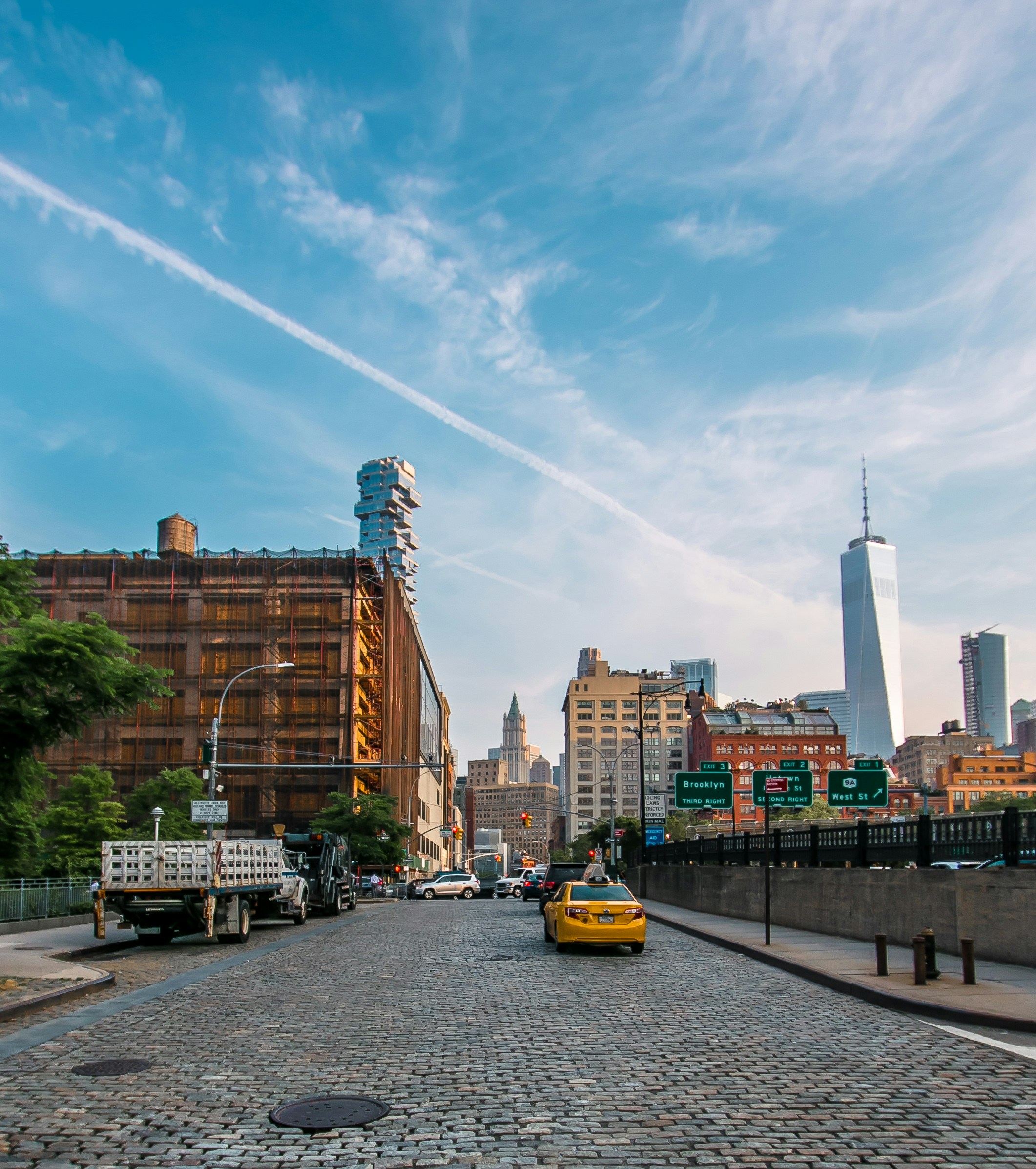
Look above the storefronts. The repeating window bays, the cast-iron columns, the wide loading entrances, the depth of the floors. That is not a Tribeca aesthetic. It is evidence. These buildings were designed for a business where things arrived, were stored, displayed, examined, bought, sold, cut, sewn and shipped somewhere else. Even the width of the streets makes more sense if you picture them full of drays, and later trucks.
Almost all the merchants are gone now. The last of them locked the door on Walker Street and sold the building. But the galleries on White and Walker and Broadway are hanging work in rooms that were built to hold cloth, lit by windows that were cut to judge color, on floors rated for a weight nobody puts on them anymore.
Without the buildings the cloth merchants left behind, none of what came next would have had anywhere to happen.
Sources
The main documents behind this piece.
- Last of the Tribeca Textile Wholesalers Finally Ready to Let Their Building Go
- Textile Dealers Turn Down Offers, Hold on to Their Building
- Urban Capital, Prosper Property Secure $32M to Convert Historic Tribeca Building
- 39 Worth Street Building designation report (LP-2539)
- 39 Worth Street Building
- Two Worth Street Buildings Landmarked
- Springs Mills Building, 104 West 40th Street
- In the News: "We don't like change."
- "Worry on Worth Street"
- Tribeca East Historic District designation report; Springs Mills Building designation report