Tea for the Gods, on North Moore Street.
For two days in November, a Japanese tea room stood inside Ippodo Gallery on North Moore Street. It was built by hand in front of the guests, and taken apart again at the end. We went on Monday. It felt like Tribeca had moved a little closer to Japan.
The tea room is called TEA FOR THE GODS. It belongs to wanova, a Tokyo company whose tagline is "Feeling Japan Closer," and it travels. wanova says it has been set up in New York, Paris, Taiwan and China, including at the United Nations Headquarters in 2018. After a pause of several years, the tour starts again here. The New York sessions ran November 22 and 23 at Ippodo Gallery, by private invitation.
A room built in ten minutes
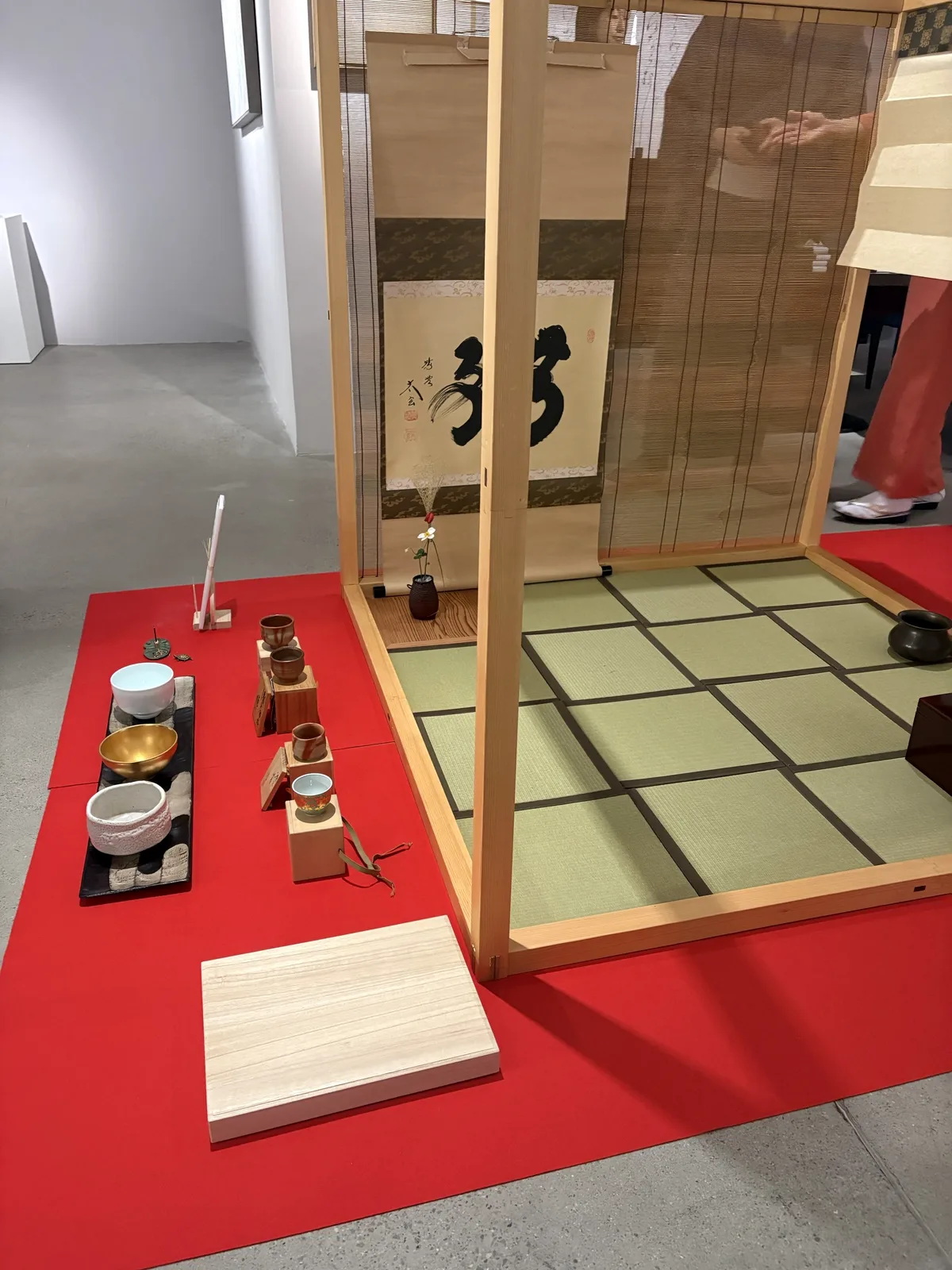
According to wanova, the room goes up in about ten minutes. The timber frame is joined with Edo sashimono, traditional Japanese joinery, then finished with tatami, bamboo blinds, a low crawl-through entrance and a tokonoma alcove for the scroll. One guest is asked to set a piece of the frame in place.
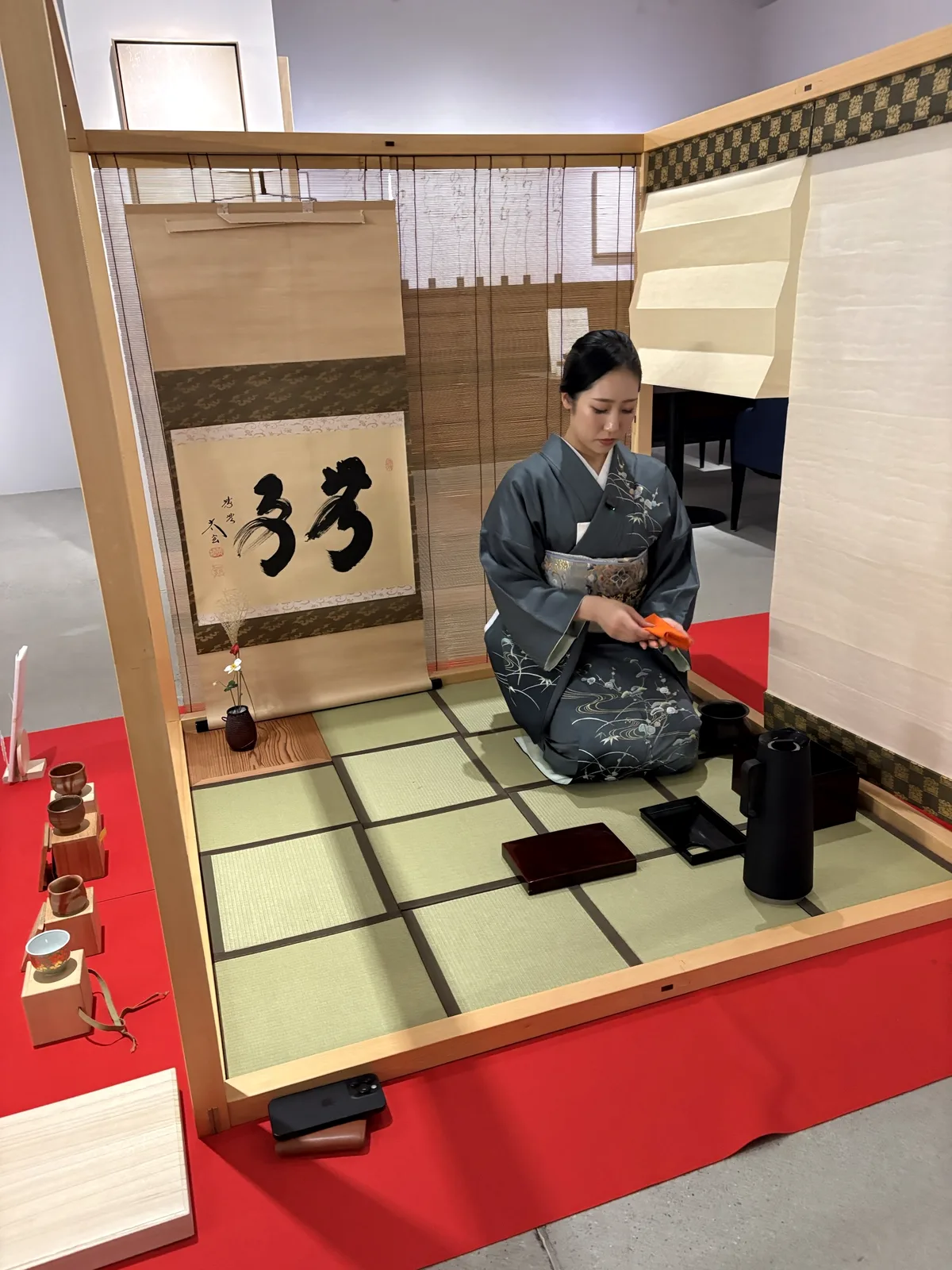
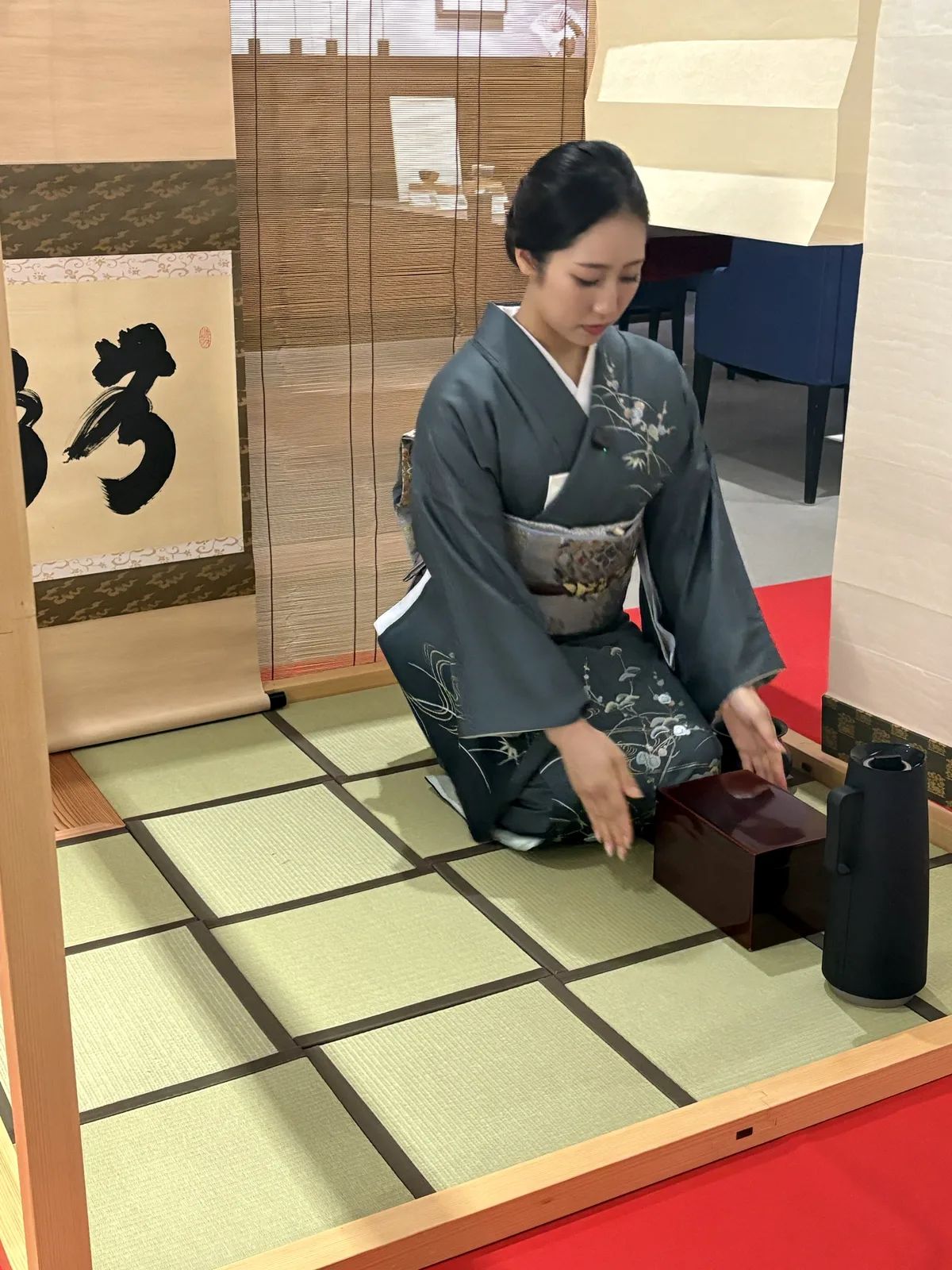
The first cup is not for the guests. The host sets it beneath the scroll and bows. That gesture gives the gathering its name. wanova is careful to say it is not recreating a religious rite. It treats the first cup as a sign of gratitude before anything is shared. After that comes a small sip of sake, with a non-alcoholic option.
Three teas, one of them milled on the spot
The teas come from wanova's Roppongi Tea Factory in Tokyo: hon-gyokuro from Uji, a single-origin sencha from Shizuoka, and matcha. A small steel mill sat on a plinth beside the room, grinding the matcha fresh during the session.
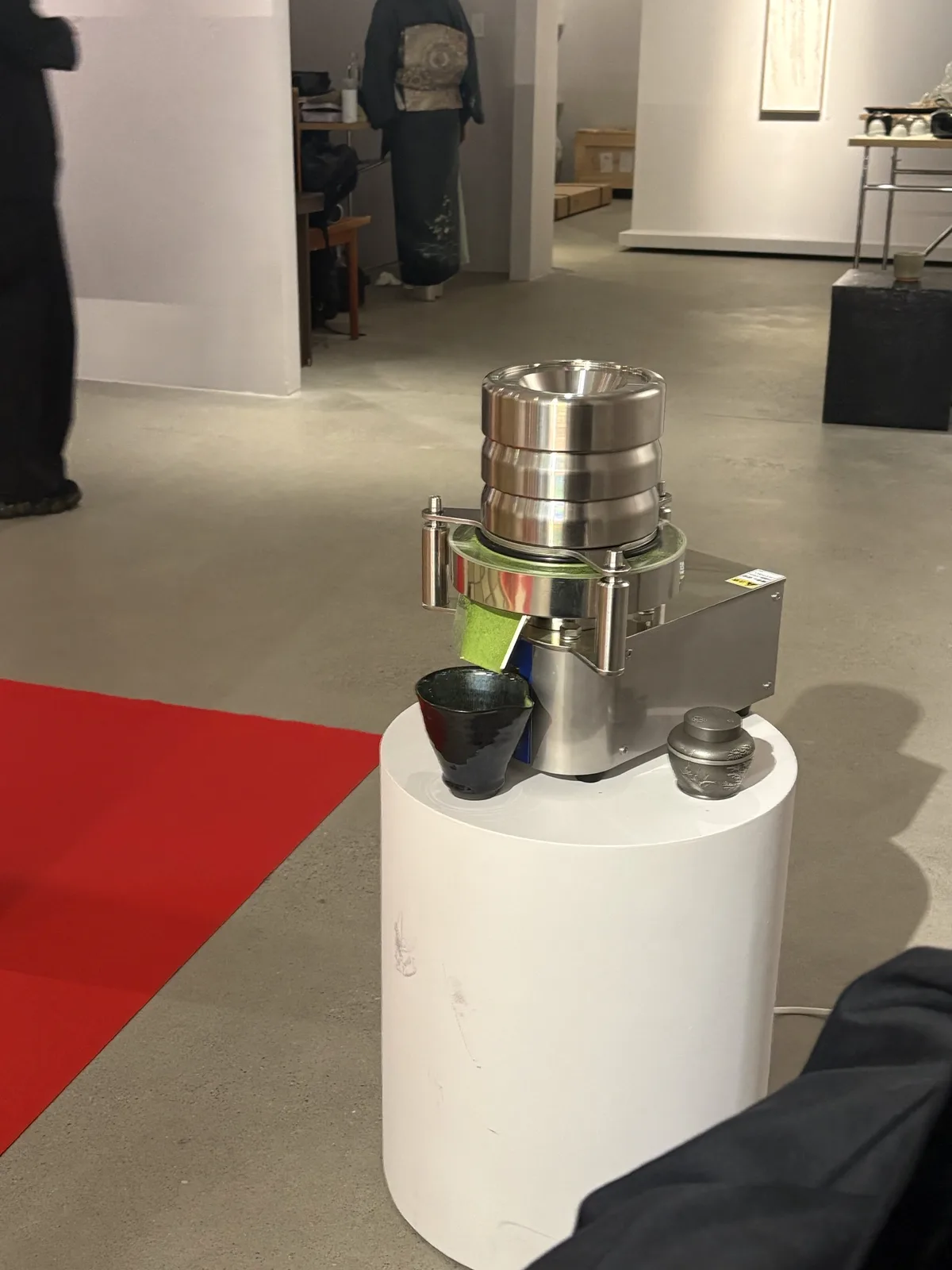
The matcha is what wanova calls matured. The tea leaves rest in a ceramic jar for more than six months before they are ground, the old way, and the jar is opened in late autumn. So the timing of a November tasting is not an accident.
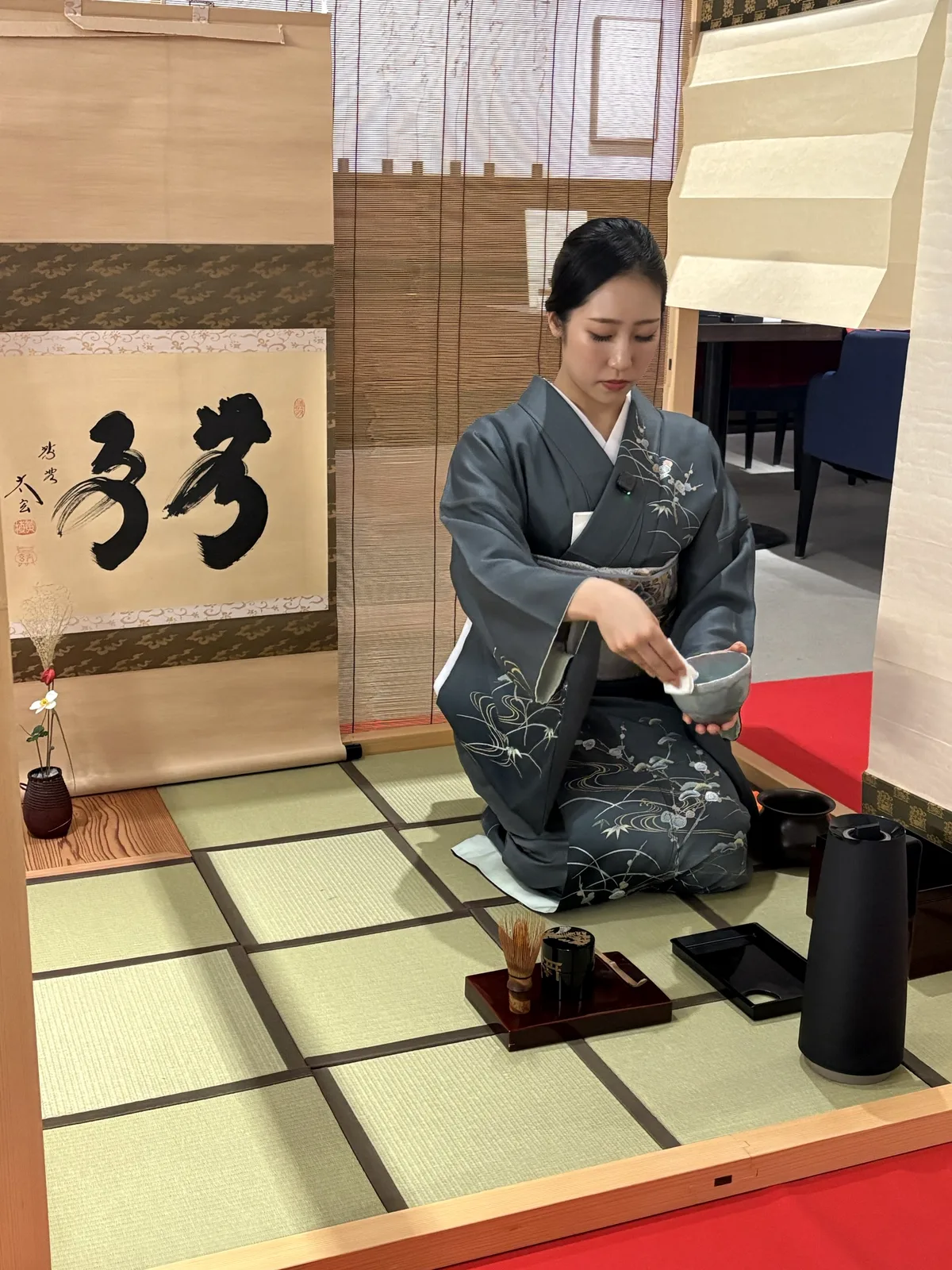
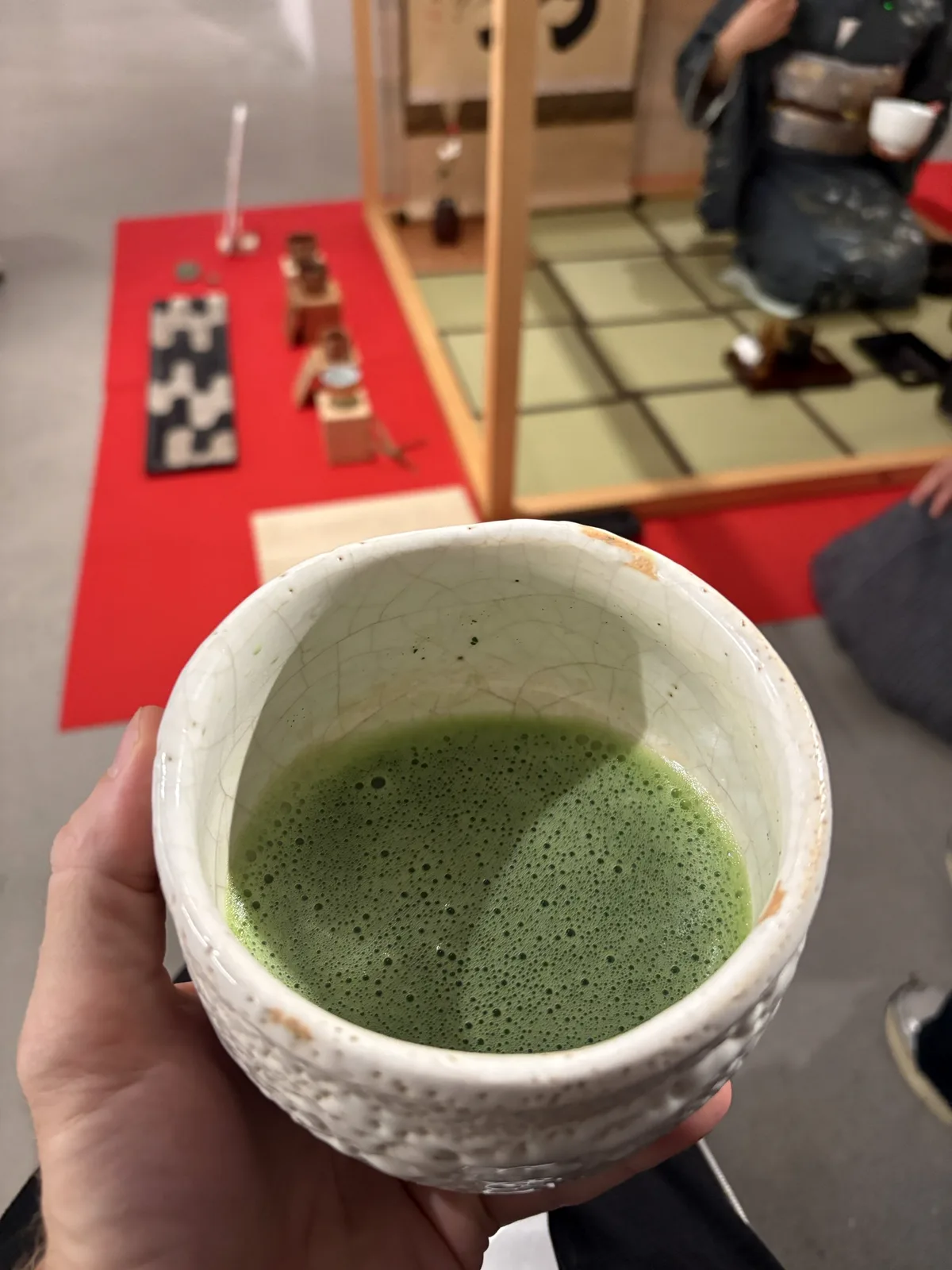
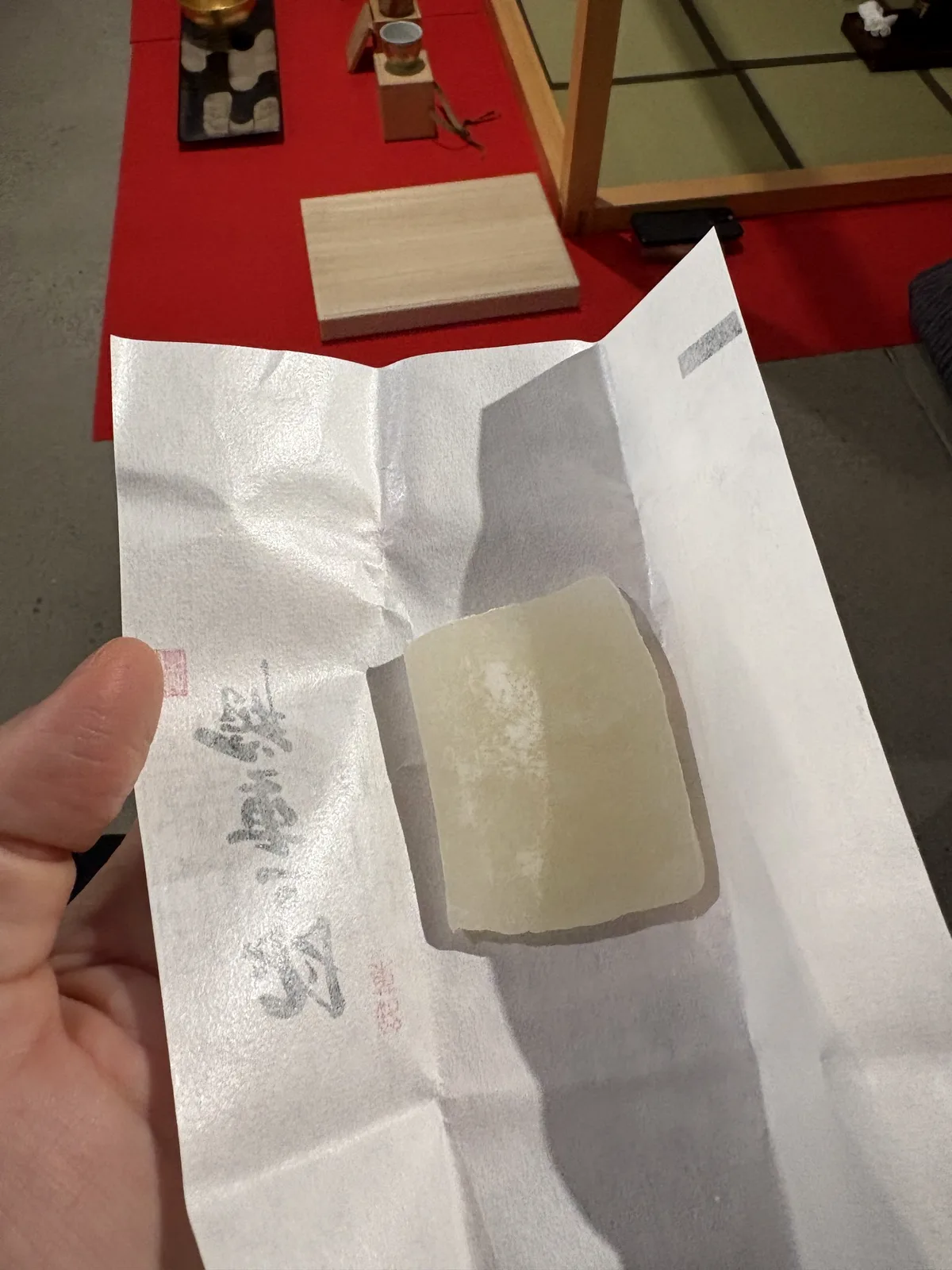
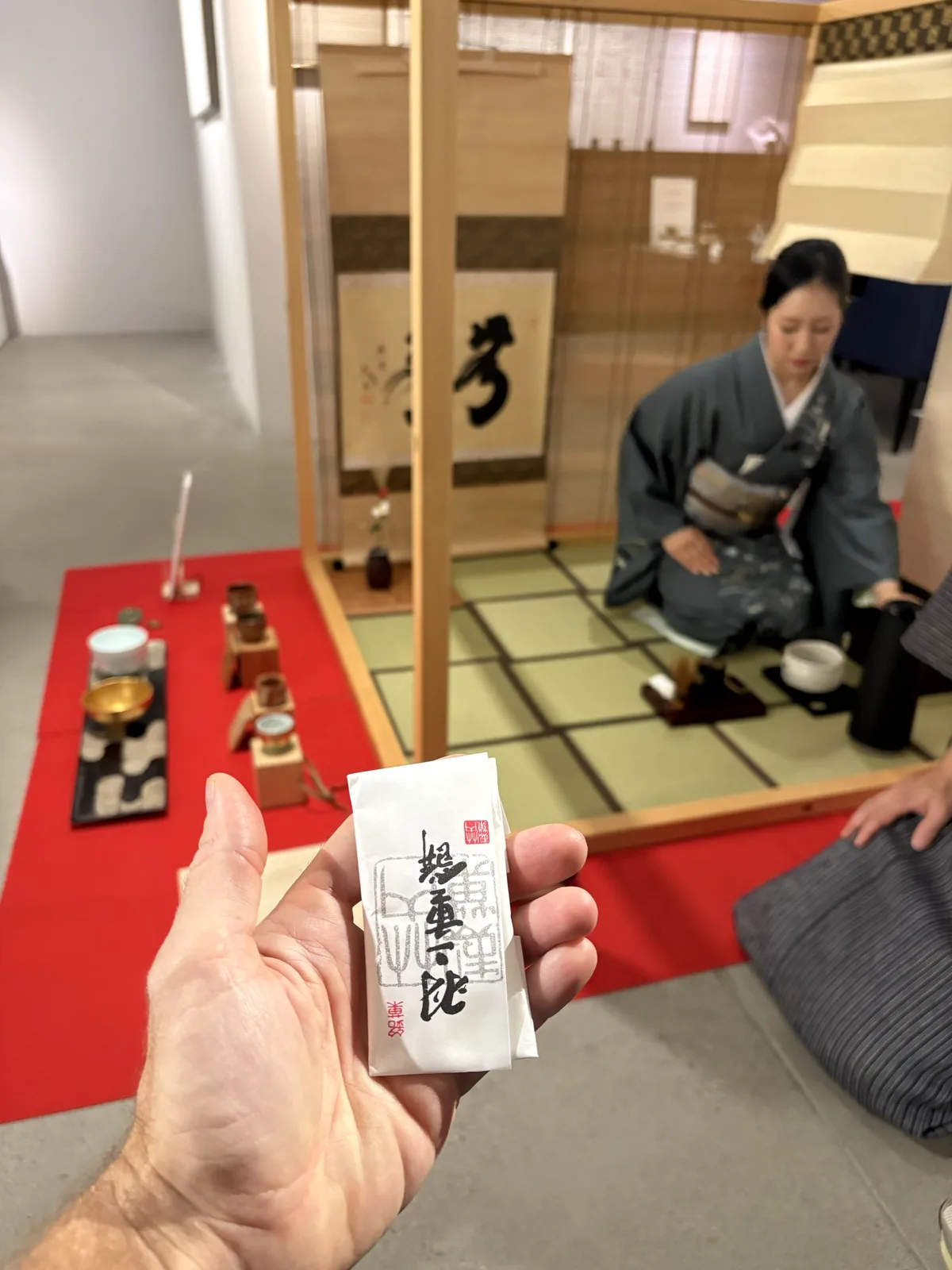
The sencha is poured into cups by different Japanese ceramic artists, and wanova says some are by Living National Treasures. Same tea, different cup, different taste. Our matcha came bright green with a fine foam, in a white crackled bowl that was rough on the outside. With it came a sweet: a soft square of mochi, wrapped in paper printed with calligraphy and a red seal.
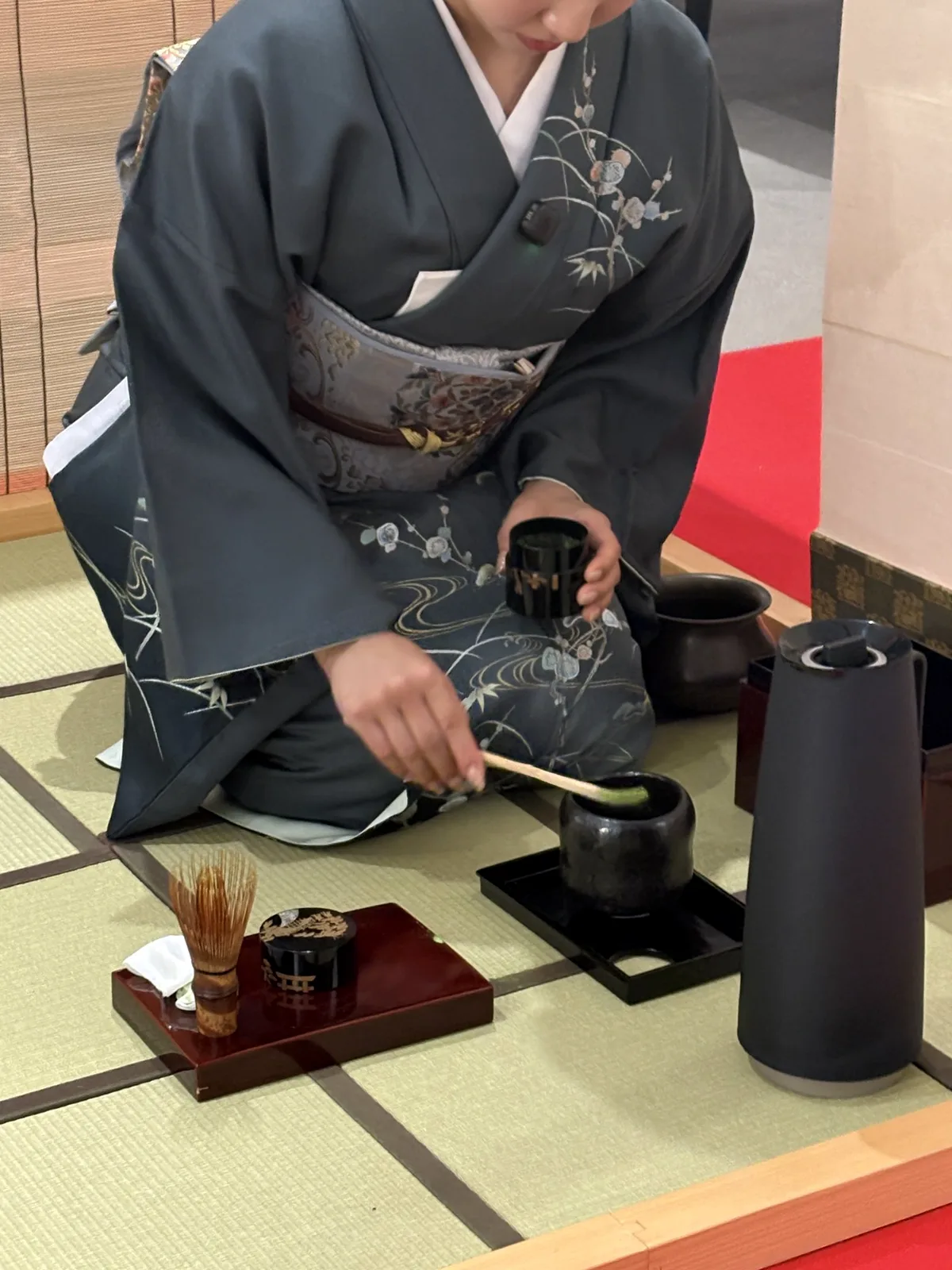
What stayed with us was how exact it all was. Every movement had its place: the way the cloth was folded, the way the bowl was wiped, the way the scoop came to rest on the tray. Nothing was rushed and nothing was extra. For those few minutes there was nothing to do but watch, and it felt like a meditation.
Near the end, each guest gets a small folded paper: a Kumano Go-o shinpu, a talisman written in crow script from Kumano Hongu Taisha, a shrine on the Kumano Kodo pilgrimage route. wanova sends you home with one question: "What is one promise you wish to make to yourself?"
Knives, cups and a box for tea
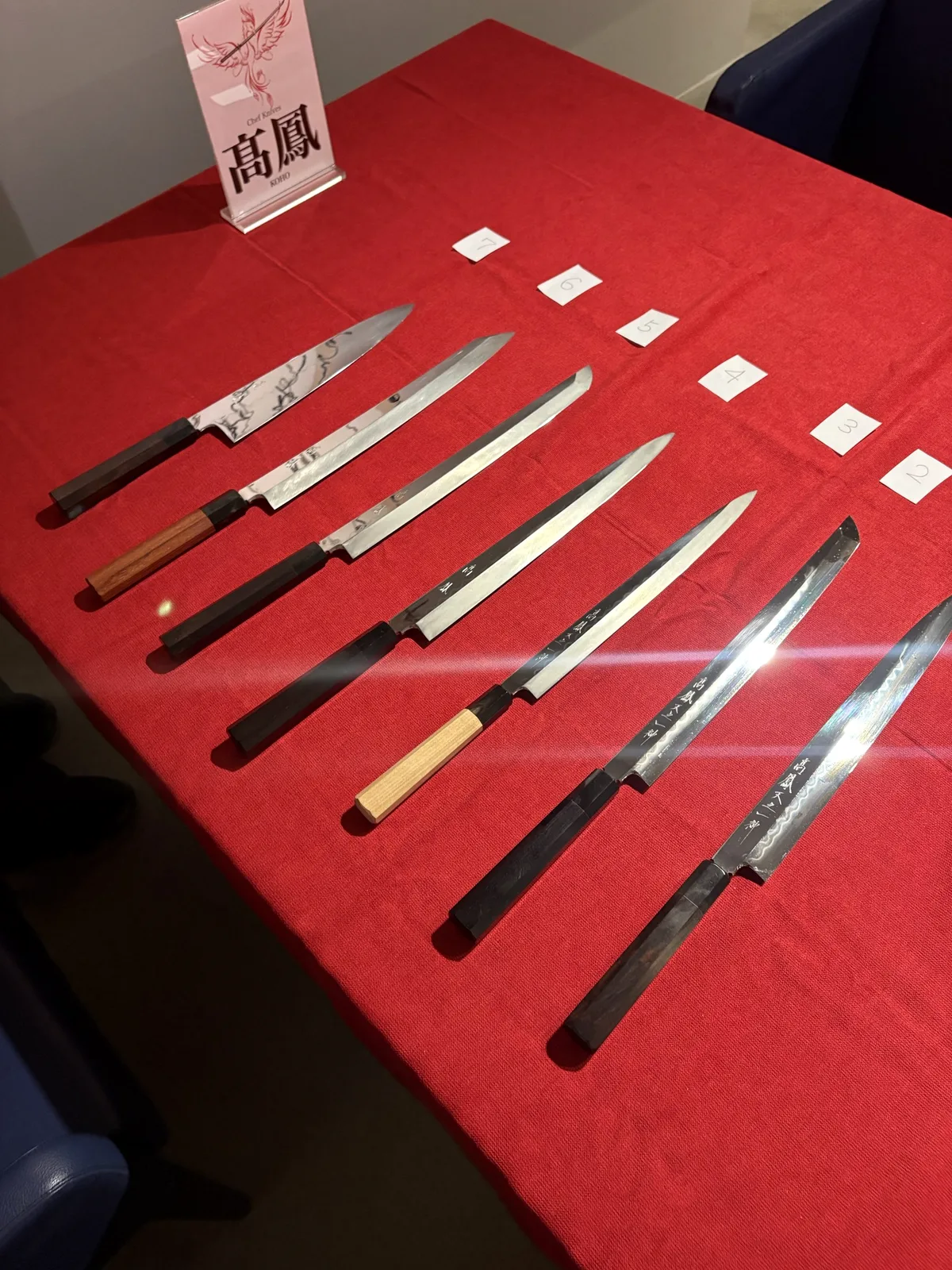
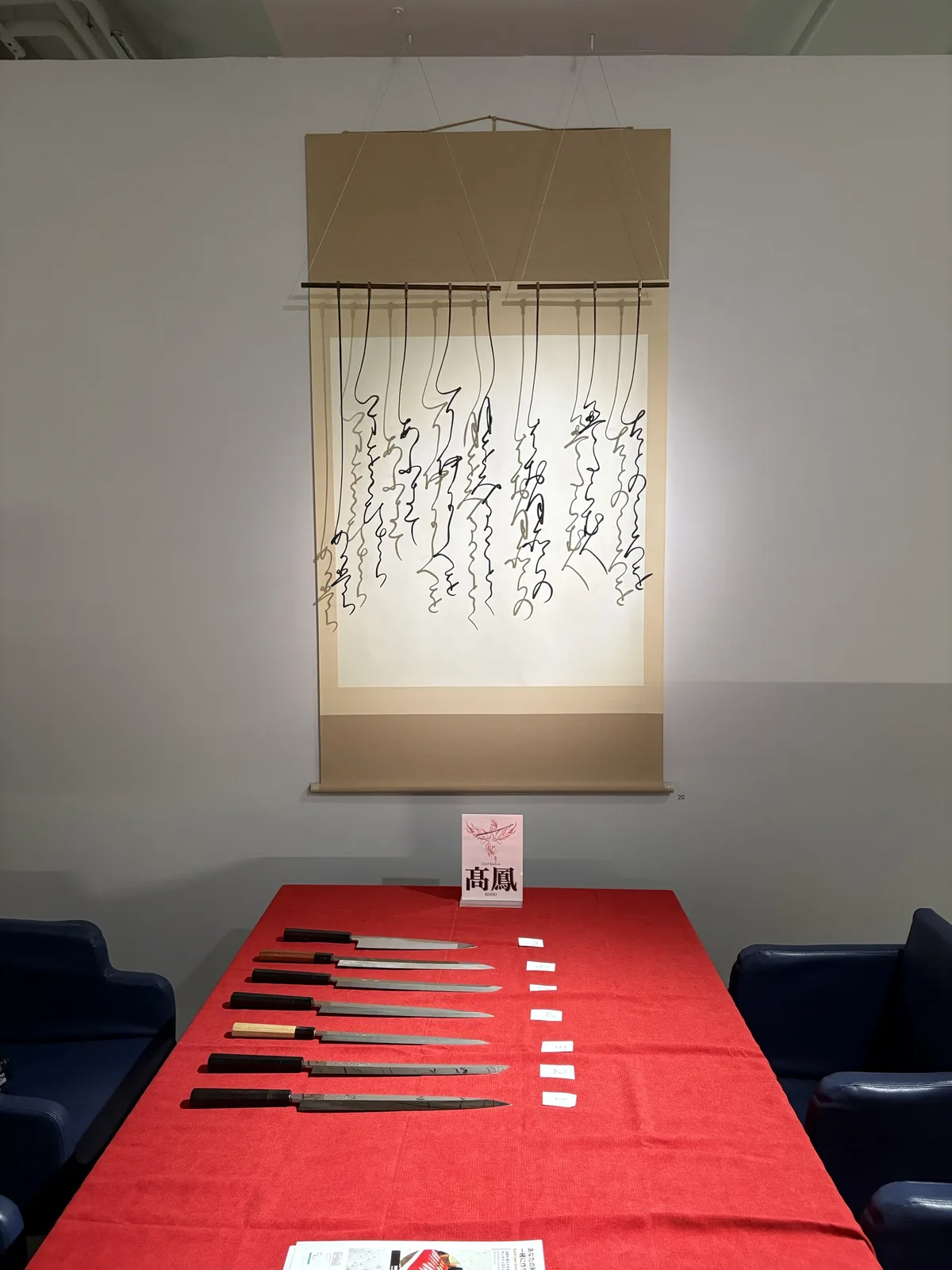
Two tables sat next to the room. One, under a red cloth, held seven numbered chef knives from KOHO. wanova says the collection is led by Kenichi Kawabata and forged by Yoshikazu Ikeda, chairman of the Sakai Traditional Craftsman Association, with sharpening by Hiroyuki Uchiyama. About fifteen pieces are made a year.
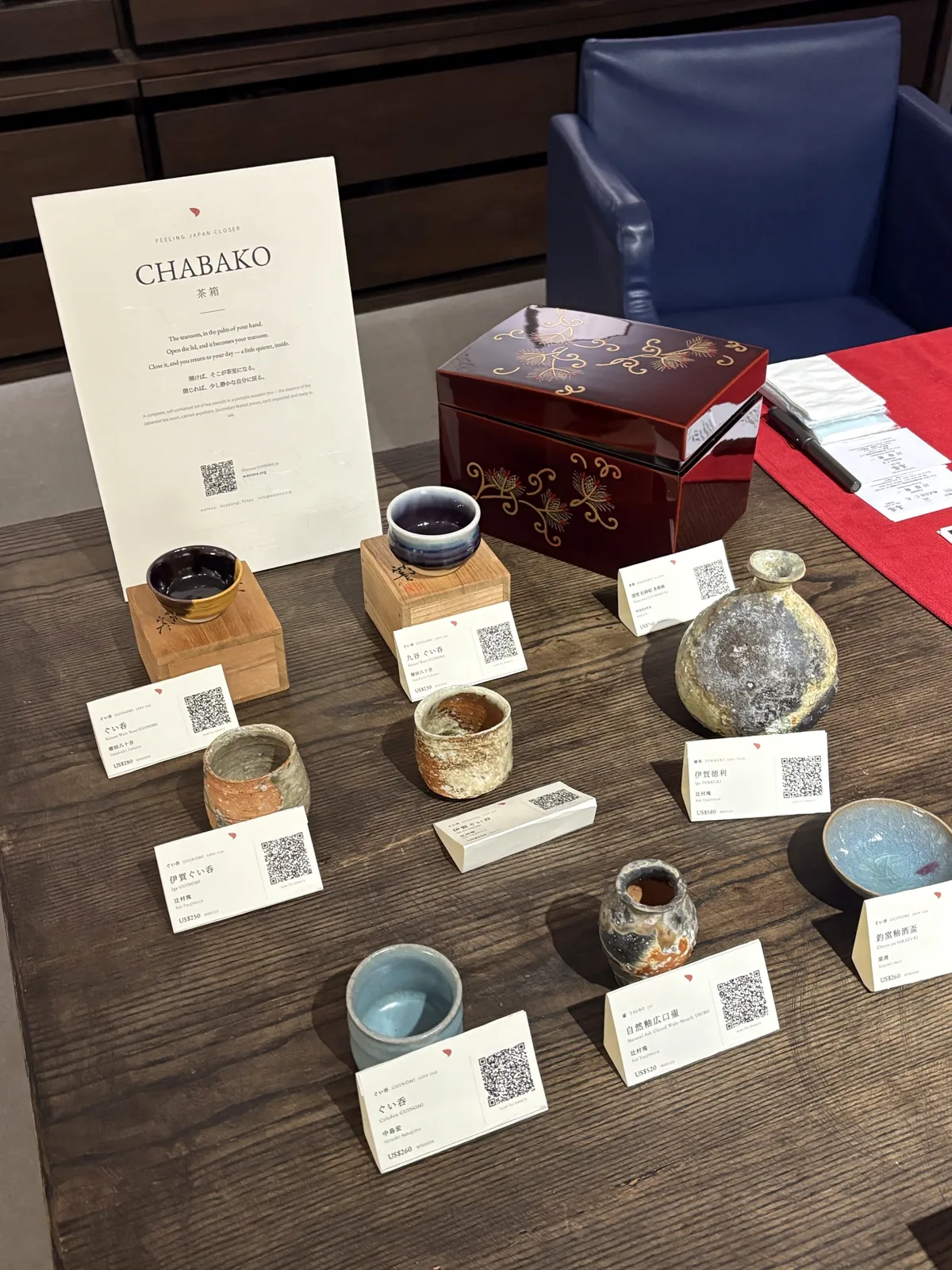
The other table held sake cups, a sake flask and a jar, each with a card naming the maker, and a lacquered chabako with a pine design. A chabako is a portable box holding a full set of tea utensils. The sign beside it called it "the tearoom, in the palm of your hand."
The show around the room
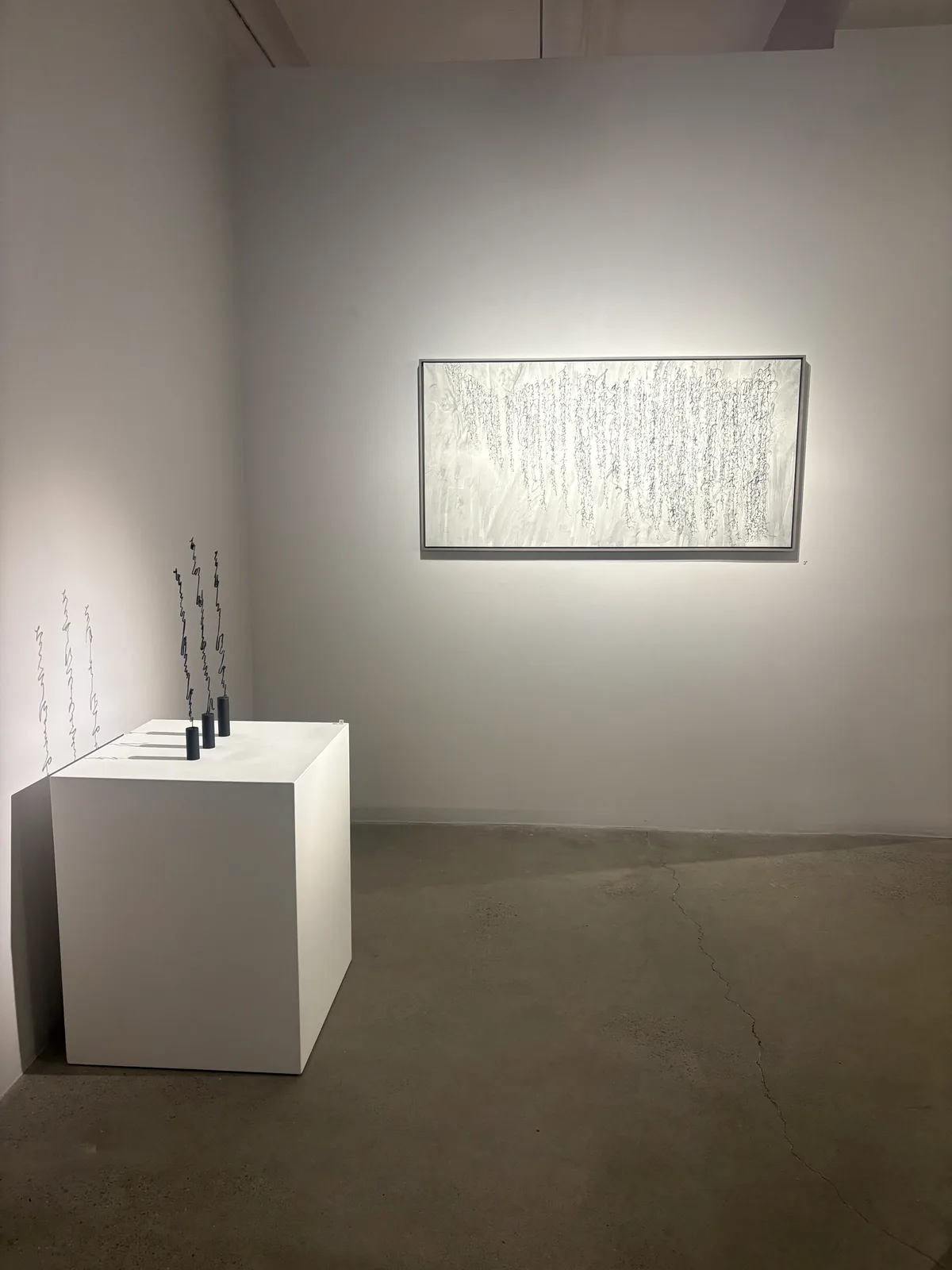
All of this happened inside Ippodo Gallery's current exhibition, Leaves of Words, which runs through December 5. It follows kana, the cursive Japanese script that grew out of Chinese characters in the ninth century, across three artists and three materials. The title comes from the preface to the Kokin Wakashū, the first anthology of poems written in kana, from around 905.
Satoshi Nemoto writes it in ink. He was born in 1984 and works with traditional brushes and rare washi paper in the manner of the Heian court. The show has twelve new works in his "Flow" series, in ink, indigo and gofun, a white pigment made from shell, built on two short poems of his own.
Tsuneo Nakazawa, born in 1973, forges it in iron. His nine works take lines of classical waka about the moon, by poets including Saigyō, and draw them as one unbroken line of metal. Under the gallery lights, each one throws a second line of shadow on the wall behind it. In person that shadow is half the work.
Shinya Yamamura, born in 1960 and now president of Kanazawa College of Art, sets the script into lacquer. His tea caddies and small lidded boxes are inlaid with kana cut by hand from abalone and other shell, so the letters change color as you move. In her director's letter, Shoko Aono writes that words have never been more plentiful or weighed less, and that is why she wanted to look again at a script more than a thousand years old.
The gallery
Ippodo Gallery shows contemporary art and craft by living Japanese artists. After twelve years on the Upper East Side, it moved to Tribeca in March 2025, during Asia Week New York. The space is on the ground floor of a pre-war building at 35 North Moore Street, behind a black cast-iron and wrought-iron entrance.
Next is "Strata: Seven Voices in Japanese Clay," from December 17 to February 20, 2027, opening with a reception on December 17, per the gallery's events page. As for the tea room, wanova lists the two New York days as the only preview sessions. It is built to travel to hotels, clubs and cultural venues, so it may turn up again.
Ippodo Gallery, 35 North Moore Street. Open Tuesday to Saturday, 11am to 6pm, and Mondays by appointment, per ippodogallery.com. Leaves of Words runs through December 5. Check before you go.
Sources
What we saw, drank and photographed is from our own visit. Everything else is linked in place.