The filmmakers of 368 Broadway.
In September 2010, a week before Catfish opened nationwide, its co-director wrote a short piece for TheWrap explaining where the film came from. Most of it is about Nev Schulman and the paintings from Michigan. But a few sentences in, Henry Joost stops to explain his address.
He shared an office with his business partner Ariel Schulman and Ariel's younger brother Nev. He describes the people around him as a loose association of like-minded filmmakers: the Neistat brothers, the Safdie brothers, Lena Dunham, Red Bucket Films. Most of them, he writes, rented studios in a pair of buildings on lower Broadway. Then the line that has followed the buildings ever since. If they were a movement, he suggested, it might be called the Diane Fink Film School, after their shared landlord.
He was joking. He was also being precise. The buildings are 368 and 373 Broadway, plus 370 Broadway and 189 Franklin. The landlord is Diane Fink Management, which has operated out of a basement office at 373 Broadway #B1 for decades and rents small commercial studios upstairs, from about 100 square feet to about 1,000. The company's own description of itself is that it has been renting studios in these buildings for over thirty years.
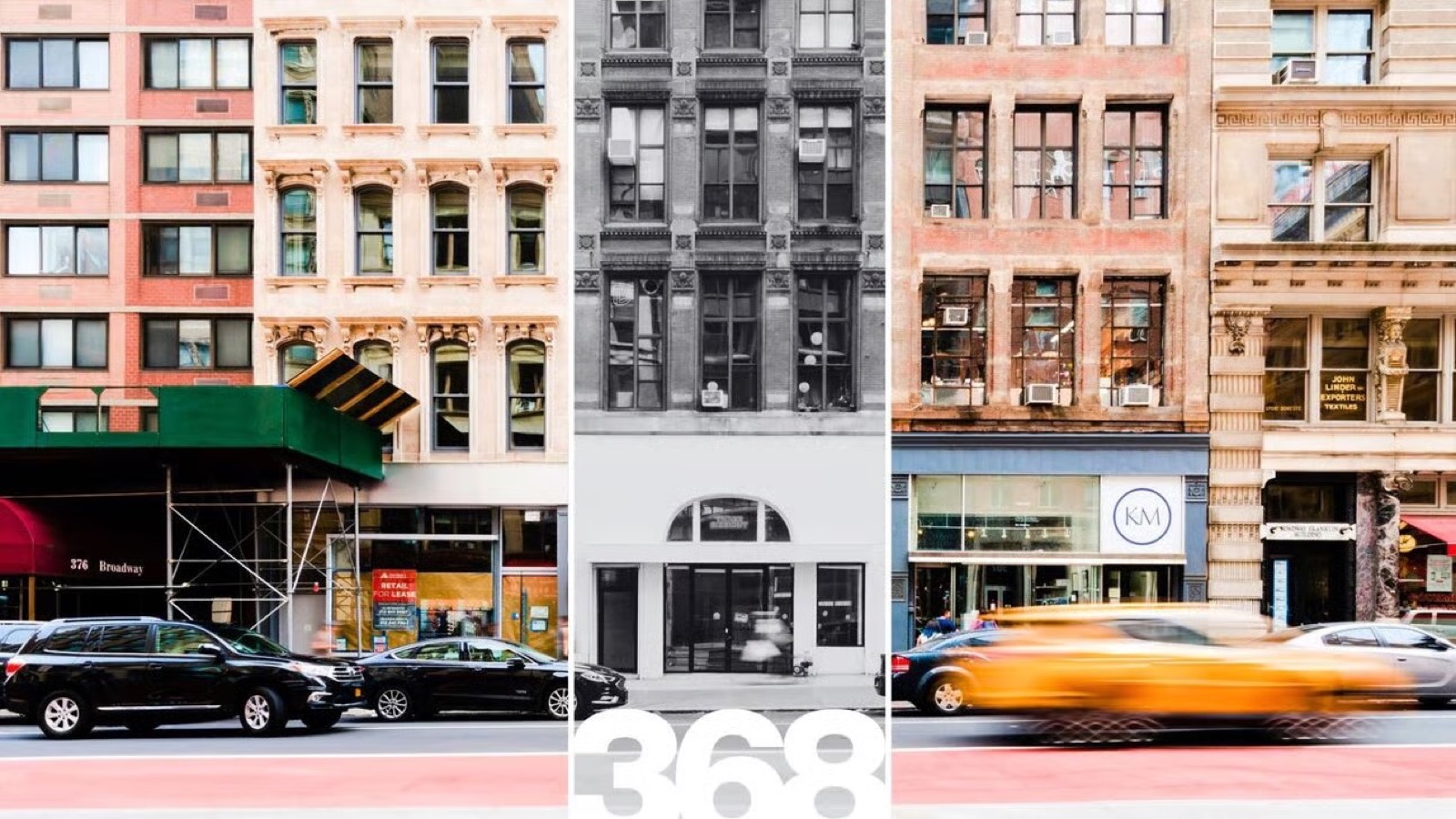
The version of this story that circulates online treats the building as a coincidence. Six future famous directors happened to rent the same cheap floors. That is not quite what happened either. The floors were cheap, they were month to month, and nobody upstairs cared what you did in the room. That was the engine. The rest of it grew up around that over the years: commercial production companies paying real rent, a music studio, and eventually a camera and lighting rental house downstairs. But the first thing, and the thing that lasted, was a room you could afford to keep.
That is not a scene. That is cheap rent that nobody bothered to raise.
Before anyone made a film there.
This stretch of Broadway between Franklin and White was the dry goods district. Textiles, notions, jewelry, underwear, ladies' suits. The buildings were built to hold sewing machines and bolts of cloth, and they were built cheap.
The clearest surviving record belongs to 370. In April 1880 the Real Estate Record and Builders' Guide reported that John Jay and Edmund B. Aymar intended to replace the existing structure with a five-story brick store running back through the block to Cortlandt Alley. They hired the architect brothers David and John Jardine, who built it in red brick with terra cotta panels of sunflowers and ferns. It cost $35,000. Tom Miller has the full history.
The building's fourth and fifth floors were connected to 368 Broadway by internal doorways. Danzig & Feuchtwanger made underwear up there. Danzig Brothers made ladies' suits. Roughly a hundred girls worked the machines, heated by wood stoves that also warmed the smoothing irons. On the evening of January 7, 1882, someone left a stove burning. A Butler Brothers salesman standing under the skylight looked up and saw the fourth floor glowing. Firefighters got hoses to the third floor, found the stairway boarded up, and had to retreat and run the lines up ladders from the alley. The top two floors burned out. The rest was, in the Times's word, deluged.
Repairs came to $4,677.
That is what these floors were for. Small operations, thin margins, shared walls, a freight elevator, and a way out to the alley. Almost none of that changed. The tenants changed.
The Finks.
In July 2013, Tribeca Citizen published a short piece after Josh Fink invited the editor over to poke around on the roofs. It is the single most useful document about who has owned these buildings and why.
The Fink family owns 189 Franklin and 368, 370 and 373-375 Broadway. Charles Fink bought them decades ago for his business, Magna Fabrics, which was established in 1942. His sons Larry and Jerry took over. For most of the last century this stretch of lower Broadway was a hub for wholesale textile merchants, and Magna was one of them. Then the trade hollowed out through the 1980s and 90s as fabric production moved to China and India, and the merchants went with it. Magna eventually moved to New Jersey, where it still sells fabric out of Cresskill with Larry Fink's name on the contact page. When the company left Broadway, Fink put an awning on the building announcing the move, because he did not want people to think the business had simply vanished.
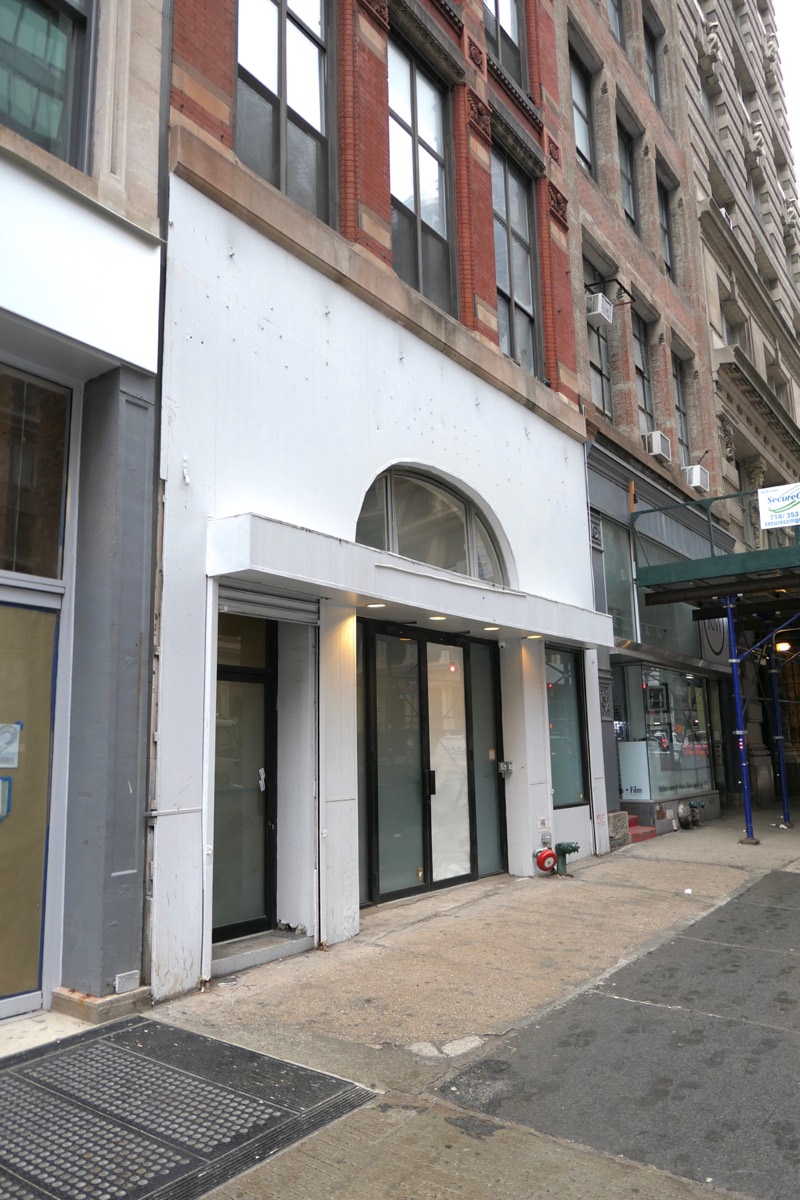
The buildings did not follow the business to New Jersey. They stayed, they were branded Tribeca Spaces, and they filled up with writers, actors, film producers, artists, photographers, illustrators, and, per Tribeca Citizen's own list, axe-makers.
The editor asked Josh Fink the obvious question. Everyone else on Broadway was converting to condos. Why not you? The answer recorded is not a manifesto. He was enthusiastic about the tenants. He lit up talking about who had rented there.
That is the whole mechanism, and it is worth being blunt about how ordinary it is. A family bought commercial buildings for a fabric business, the trade moved overseas, and instead of selling or converting they kept renting small rooms to people who needed small rooms. They did this through the 1990s, through the 2000s, through the neighborhood's entire transformation into one of the most expensive residential districts in the country. There is no need to make them saints. They did not flip the floors. Over thirty-odd years, that turned out to be enough.
Red Bucket, 368 Broadway, Room 203.
The hardest evidence for what happened next is not an interview. It is a festival credit.
When The Pleasure of Being Robbed premiered at Cannes Directors' Fortnight in 2008, the production company listed in the program was Red Bucket Films, 368 Broadway #203, New York. Josh Safdie directed it. He and Benny edited it with Brett Jutkiewicz. It was the first feature out of a company the brothers had started in high school.
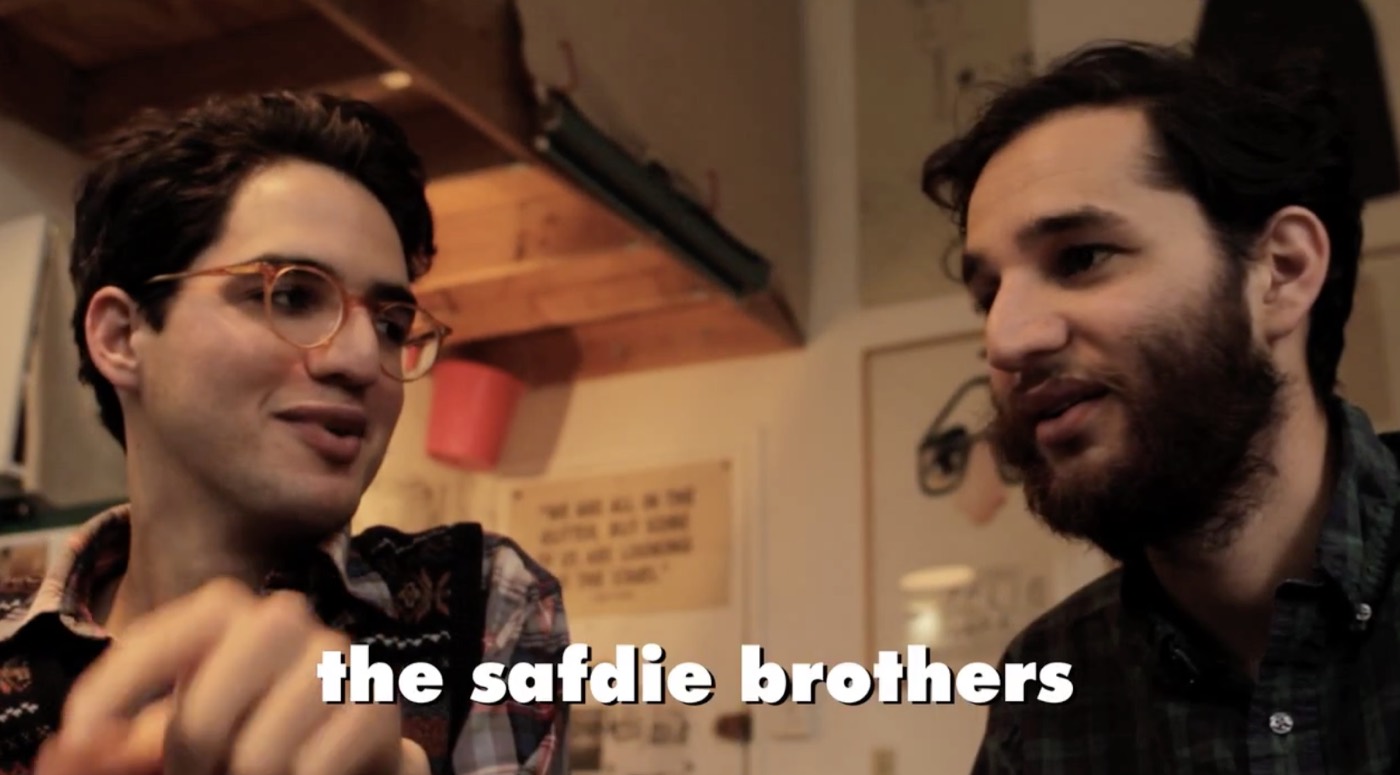
The following year Red Bucket made Daddy Longlegs, which premiered at Cannes and won a Spirit Award. One of its two producers was Casey Neistat.
That credit is the load-bearing fact in this whole story. In 2009, a YouTube filmmaker with an office in the building put money and his name on a feature by the two guys down the hall. Ten years later one of them directed Uncut Gems and the other founded a creator studio on the ground floor of 370. Years after that, the Safdies gave Filmmaker Magazine a tour of the office.
Down the hall from Red Bucket, Ariel Schulman and Henry Joost were running Supermarché, founded in 2006 to make wedding and pharmaceutical videos. Nev Schulman had a photography business and a studio, and he invited his brother and Joost to share it. Asked years later by Tribeca Film whether they would have made Catfish if they had not moved in with Nev, Schulman's answer was that they absolutely would not have. There was no intention to make a movie. Nev would look up from his desk and tell them to come see what his internet girlfriend's family was up to, and they had cameras out constantly, so they rolled. The office is in the film.
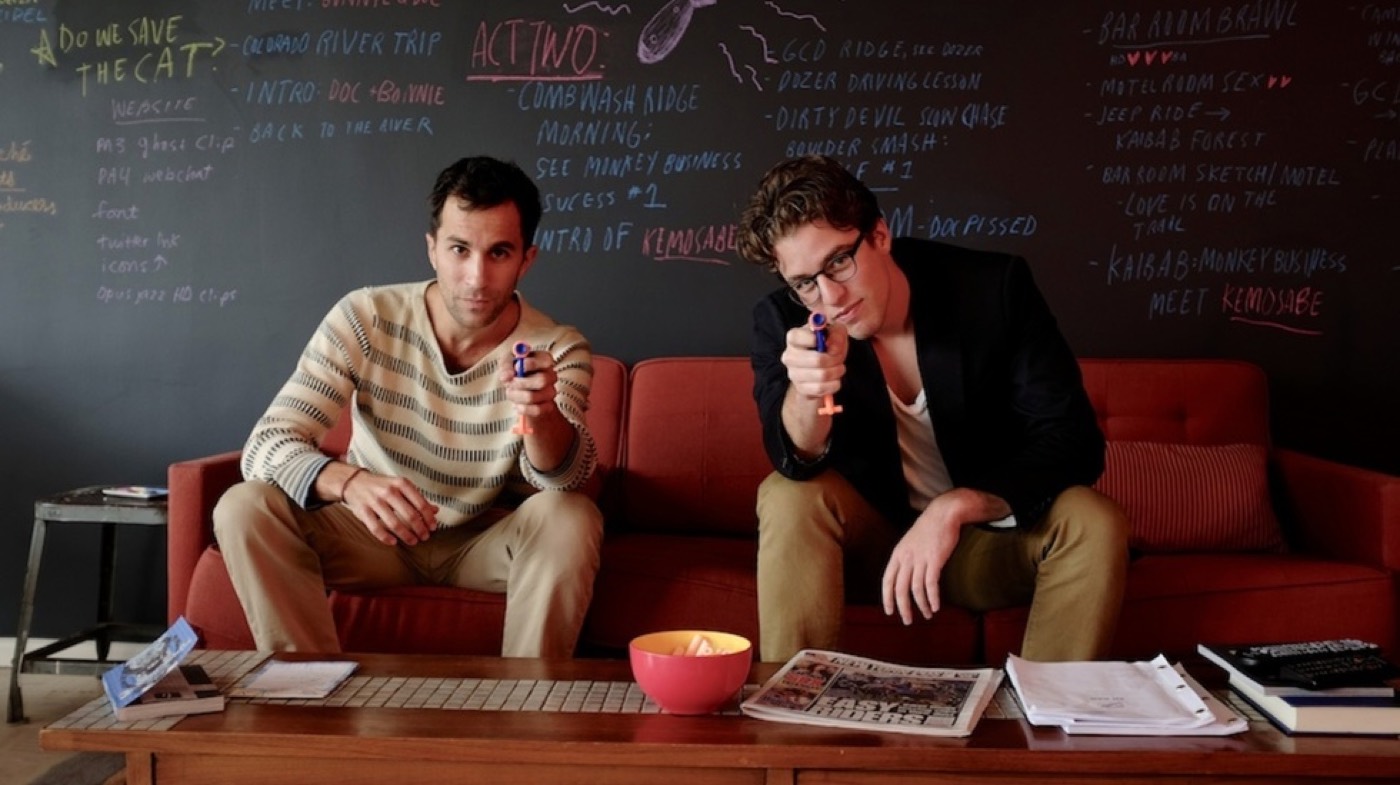
It cost about $30,000. It premiered at Sundance in January 2010, made $3.5 million, put a new verb in the dictionary, and produced an MTV series that ran more than 200 episodes.
Casey and Van Neistat were in the same buildings across the same years. Van made his first internet video, The Holland Tunnel, in 2000, and spent much of the decade directing films for Tom Sachs. In 2010, HBO aired The Neistat Brothers, eight episodes built entirely from footage the two of them shot themselves. Van has since talked at length about those years in the building. Joost, writing in 2010, cited the brothers as proof of how compulsive the self-documentation had become in that circle: the Neistats built an HBO show out of it, and Red Bucket cut their pocket-camera footage into an hour-long DVD called Buttons.
Oscar Boyson is the figure who ties the two ends of the building together. He came to New York in his twenties, answered a Craigslist ad, and ended up working for Casey and Van Neistat. He kept his own office in the building and became one of the Safdie brothers’ core producers, working with them for close to twenty years on Heaven Knows What, Good Time and Uncut Gems. This past May he put out his own first feature as a director, Our Hero, Balthazar, which the Associated Press called a movie made for the Letterboxd generation. One Craigslist reply put him inside nearly every version of this story at once.
Lena Dunham is named in Joost’s 2010 list, and Tribeca Spaces cites her description of her office in Not That Kind of Girl. She had grown up a few blocks from the door. Her parents, the artists Carroll Dunham and Laurie Simmons, kept a loft on Desbrosses Street, where she shot Tiny Furniture in 2009. The office at 368 was her own. Two years after Joost wrote his list, Girls was on HBO.
Greta Gerwig deserves a more careful sentence than she usually gets. She is the name most often attached to this building and the one with the thinnest paper trail. Joost's contemporaneous account does not include her. The claim comes from later coverage, principally a 2023 video essay by Blocks and Borough that Tribeca Spaces has featured on its own press page, along with a clip the landlord captions as Gerwig talking about her filmmaking community at 368 Broadway. What is separately documented is that Frances Ha was shot largely in the apartment Gerwig shared with producer Oscar Boyson, which Boyson described to the Associated Press this past May, and that Boyson's career has run alongside the Safdies for close to twenty years. Take the Gerwig connection as reported rather than proven, which is more than most of the internet does with it.
The day jobs.
Here is the part the video essays leave out.
The commercial layer. Dream Machine Creative ran out of Studio 210 for more than a decade, starting in 2012. Founded by Dylan Steinberg, it was a full-service production company doing agency and brand work rather than features. Nine or so people. Commercials, editorial, animation, building recording studios for clients. They even shot a holiday video in the office. None of these names will end up in a video essay, and they were the reason the building worked. Commercial production is what pays for a room in Manhattan in the years before anyone will pay you for your own films. Somebody in the building was always hiring.
And the cohort kept refreshing. Casey Neistat had held his own studio in the building since 2007. When he left for Los Angeles in 2019 he kept part of it and passed the larger half to his collaborator Sam Sheffer. Three years later he moved back. He still works out of the building and is still posting.
By then the address had become a destination in its own right. The skateboarder John Hill announced his room in 2018 with a video called My New Office in 368, Casey Neistat's Building, which tells you how quickly the building's name changed hands. Max Joseph, who hosted the MTV series spun out of the documentary made in this building in 2010, posted a reel about getting an office here fourteen years later. Brett Conti called his the dream NYC studio. Jordan Studdard, Sara Dietchy, Colt Kirwan, Tejas Hullur, Marcus Adolf, Preston Palmo and Willie Morris all did the same thing, which is announce to an audience that they had gotten a room.
Most of them are people in their twenties with a camera, an audience, and rent to make every month. Nobody handed them anything. That is the same description that fit Josh Safdie in 2007: broke, in a small room, working like the rent was due, because it was.
Most of them have also since moved on, which is the normal outcome rather than a decline. Dream Machine's Studio 210 is listed as a gallery now. Studio 368 closed in February 2024. The rooms are small and the leases are short, and people leave when the work outgrows the room. Then somebody else in their twenties takes it.
The Factory that was next door.
Most accounts date Casey Neistat's arrival to 2018. He had been in the building for eleven years by then.
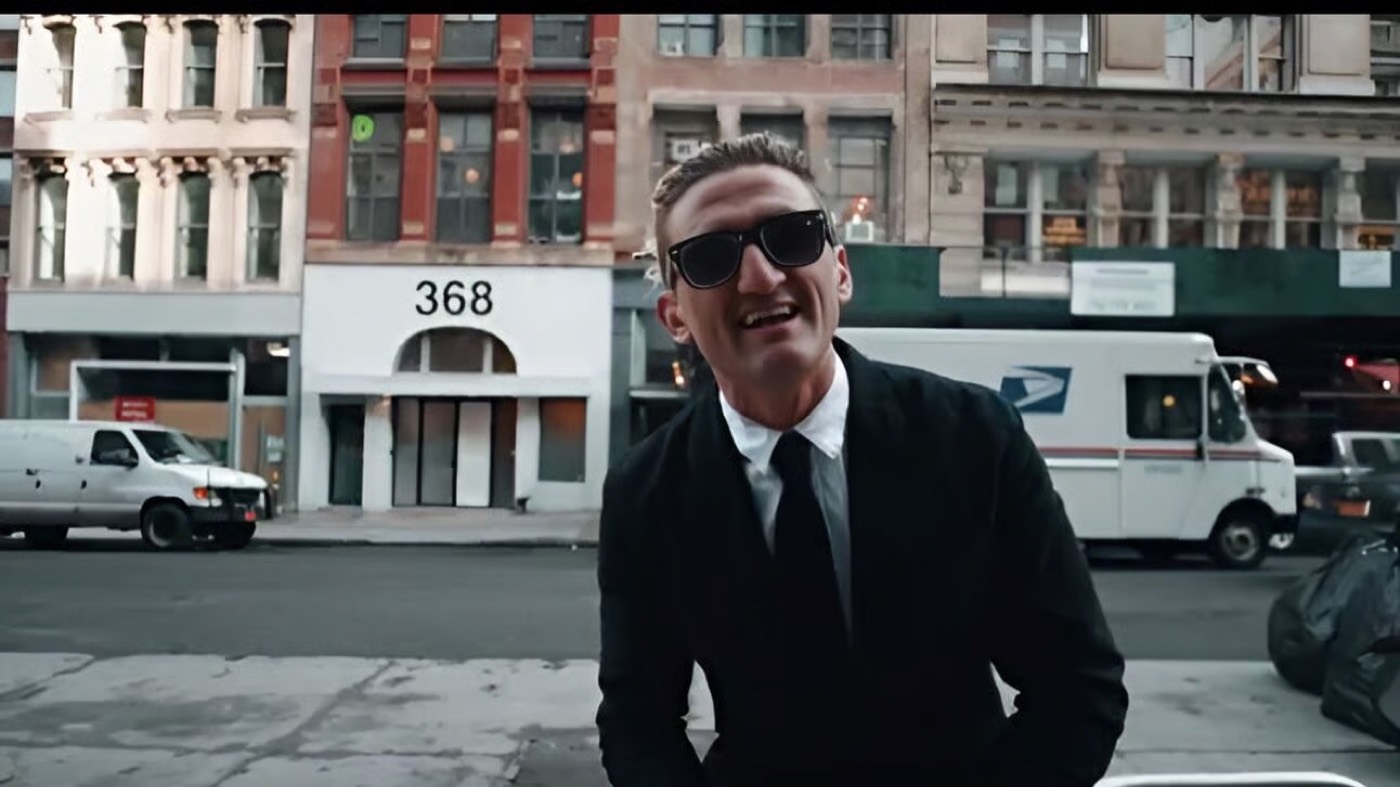
In April 2018 he announced a three-level creative space and called it 368, after his address. Tribeca Citizen pointed out the same week that the facility was actually at 370 Broadway, on the ground floor and two lower levels. Neistat's own office stayed at 368, where it had been since 2007. The rooms he took over had been offices for Beme, the app company CNN bought for a reported $25 million.
He compared it to Warhol's Factory in the launch video. What he described wanting was less grand and more useful: a production studio, a music studio, a podcast studio, room to skateboard and host dinners, on the theory that the reason the New York creator community was weak was that it had no center. Adobe ran a week-long open call that December to build its visual identity.
For six years it ran free. Creators did not pay. The space was underwritten by agency and production work for clients including YouTube, Google and Uber, and the day-to-day was held together by Paul Leys, who kept resisting the obvious fix of charging a membership fee. It closed in February 2024. In Creator Economy NYC's account of the closure, one member said the place should have been named after Leys for how much he held together and never charged for. Another described walking in never knowing what the day would be, and cited an afternoon when Bobby Shmurda was in the kitchen making a video about waffles.
Along the way the space became, among other things, a gallery. In April 2023, The 368 Gallery opened with a show by Danny Casale, the animator who works as Coolman Coffeedan. Casale went viral in 2017 with a cartoon called Snakes Have Legs, has three million followers on Instagram, published a book in 2021 and has shown in Shanghai, Hong Kong and Seoul. His own account of the opening is that it was his first official gallery event, that fans lined up around the block, and that there was a live band, a secret room and a motorcycle he painted in front of everyone.
The financial model that ended Studio 368 is the exact inverse of the one that made the buildings work in the first place. Free is a subsidy that has to be earned every quarter. Cheap and month-to-month is a subsidy that runs on autopilot for thirty years.
Never only film.
Read the landlord's press page and the film story turns out to be a subset.
Peter Buchanan-Smith ran Best Made Company out of the buildings, which is the axe-maker in Tribeca Citizen's 2013 list of tenants. He had been art director of the New York Times Op-Ed page on September 11, 2001, and creative director of Paper, before starting a company that sold painted hickory-handled axes and more or less set the visual grammar for a decade of American heritage retail. The Times came to his office in 2010. Alex Drexler gave GQ a tour of the Alex Mill studio. Shantell Martin gave Vogue a tour of hers, and made a drawing of the building. Stephen Powers, the graffiti writer who signs work as ESPO, met The New Yorker at his studio there. Greg Lamarche did a studio visit with Arrested Motion in 2010.
And in a former freight elevator shaft at 4 Cortlandt Alley, on the back side of the block that 370 Broadway was built to reach, Alex Kalman and the Safdie brothers opened Mmuseumm in 2012. It is about 36 square feet. It shows contemporary objects under the theory that a plastic coffee lid or a piece of prison-made bread dice can be read as evidence about the present. A second room opened a few doors down in 2015. You can look in through peepholes at any hour. The New York Times and the Wall Street Journal have both written it up, and a stretch of the alley now gets called Museum Alley.
Half a block of 19th-century garment lofts produced a documentary that renamed a form of online deception, an HBO series, an Adam Sandler picture, and a museum in an elevator shaft. The connective tissue was a leasing office in a basement and a rental counter down the hall.
What is in there now.
The galleries arrived without the filmmakers leaving.
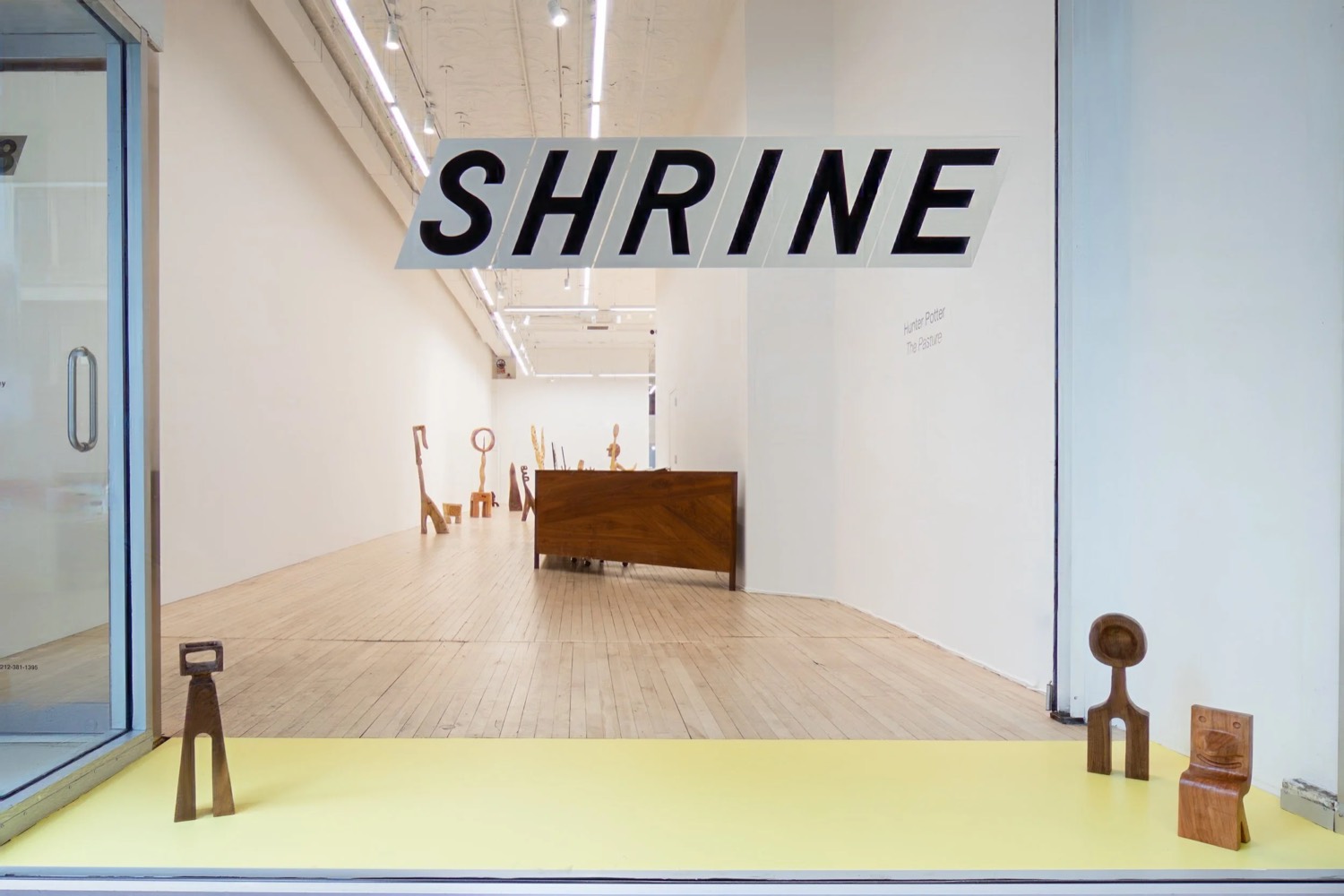
SHRINE moved into a 4,000-square-foot ground floor at 368 Broadway in 2019. Sargent's Daughters, founded on the Lower East Side in 2014 by Allegra LaViola, took the ground floor of 370 in June 2024 for its tenth anniversary. Upstairs on 370's second floor, JDJ, Deanna Evans Projects and the new Chozick Family Art Gallery share one space on a rotating monthly schedule, an arrangement they told The Art Newspaper in February 2025 was about splitting rent, shipping and fair costs so each of them could keep programming. Which is the same trick the filmmakers ran, one industry over.
The rest of the cluster, as the landlord lists it: Elza Kayal Gallery and Page (NYC) upstairs at 368. GAA at 4 Cortlandt Alley and Asya Geisberg at 4.5. Broadway on the ground floor at 373, with SARAHCROWN and The Earthen Room upstairs. When the New York Times ran its Tribeca gallery guide in October 2021, it singled out this cluster in these two buildings as the most exciting thing happening in the neighborhood.
And on a Saturday last May, more than forty tenants opened their doors. The 2025 open studio tour ran from noon to six across 368 and 373, free, no ticket. Ten studios at 368, thirty at 373, plus GAA in the alley. Painters, printmakers, a computational designer, a typographer, a couple of galleries. Most of the names on that list are not famous and are not going to be. That is what the buildings are actually full of, and always were.
The unglamorous part.
There is a version of this story where a landlord has vision. I do not think that is what happened, and I think the real version is more useful.
Someone bought buildings for a fabric business in the middle of the last century. The trade went overseas. The buildings were old, the floors were chopped into small rooms, the neighborhood was not worth much for a long stretch, and the family that owned them kept renting the rooms cheap instead of doing the thing every other owner on Broadway did.
Filmmakers found them the way filmmakers find anything: cheap, freight elevator, no one complaining about noise. Then they got to work. They hired each other on commercial shoots to cover the rent, put their names on each other's films, and a handful of them broke out. Most did not, and kept paying by the month and kept making things anyway. None of it was optimized. It needed a cheap room and a family that let you stay long enough to get good.
Walk past 368 and 370 now and there is nothing to see. Two loft buildings, a gallery behind glass at street level, an intercom. No plaque. Upstairs there are a few dozen people paying by the month for a room with a window, working on things none of us have heard of.
That has been the arrangement for thirty years. It works because nobody optimized it.
Sources
Everything above is linked in place. The full list, for anyone who wants to check the work.
Primary and contemporaneous
- Henry Joost, “Director Henry Joost: The True Story Behind ‘Catfish’”
- Cannes Directors' Fortnight program credits, The Pleasure of Being Robbed
- “A Broadway Tour”
- “Casey Neistat's New Tribeca ‘Factory’”
- Tom Miller, “The History of 370 Broadway”
- Tribeca Spaces press page
- 2025 Open Art Studio Tour
- Danny Casale, projects
The infrastructure layer
- K&M Camera
- K&M Camera business profile
- K&M Rentals
- Dream Machine Creative
- “Casey Neistat's Leaving New York, But His YouTuber Collab Space ‘368’ Will Stay Open”
- Casey Neistat, We Moved Back to New York City
Secondary
- “Workspace: We Invade the Offices of Ariel Schulman & Henry Joost of Supermarché”
- Annabel Keenan, “Sharing is caring: the New York dealers who are joining forces”
- Brett Dashevsky, “The rise and fall of Studio 368”
- “Tribeca Gallery Guide: New York's Most Vibrant Art Scene”
- “How One Building Changed Filmmaking (368 Broadway)”
- Oscar Boyson interview
- Oscar Boyson on Gerwig, the Safdies, and Our Hero, Balthazar
- NYC Selected Gallery Guide