How Tribeca became the gallery district.
In 1968, the city that would later be called Tribeca was an industrial district on the wrong side of Canal Street. Cast-iron warehouses built for the wholesale grocery and textile trades stood half-empty. Trucks rumbled down Hudson Street to the meatpacking buildings. The Twin Towers were under construction a few blocks south. Almost no one lived here.
The district had no name. Real estate listings called it Lower West Side, or sometimes just "below SoHo." The neighborhood association that eventually coined "Tribeca" — short for Triangle Below Canal — wouldn't form until the mid-1970s. By then, the artists had already started moving in.
The cast-iron inheritance
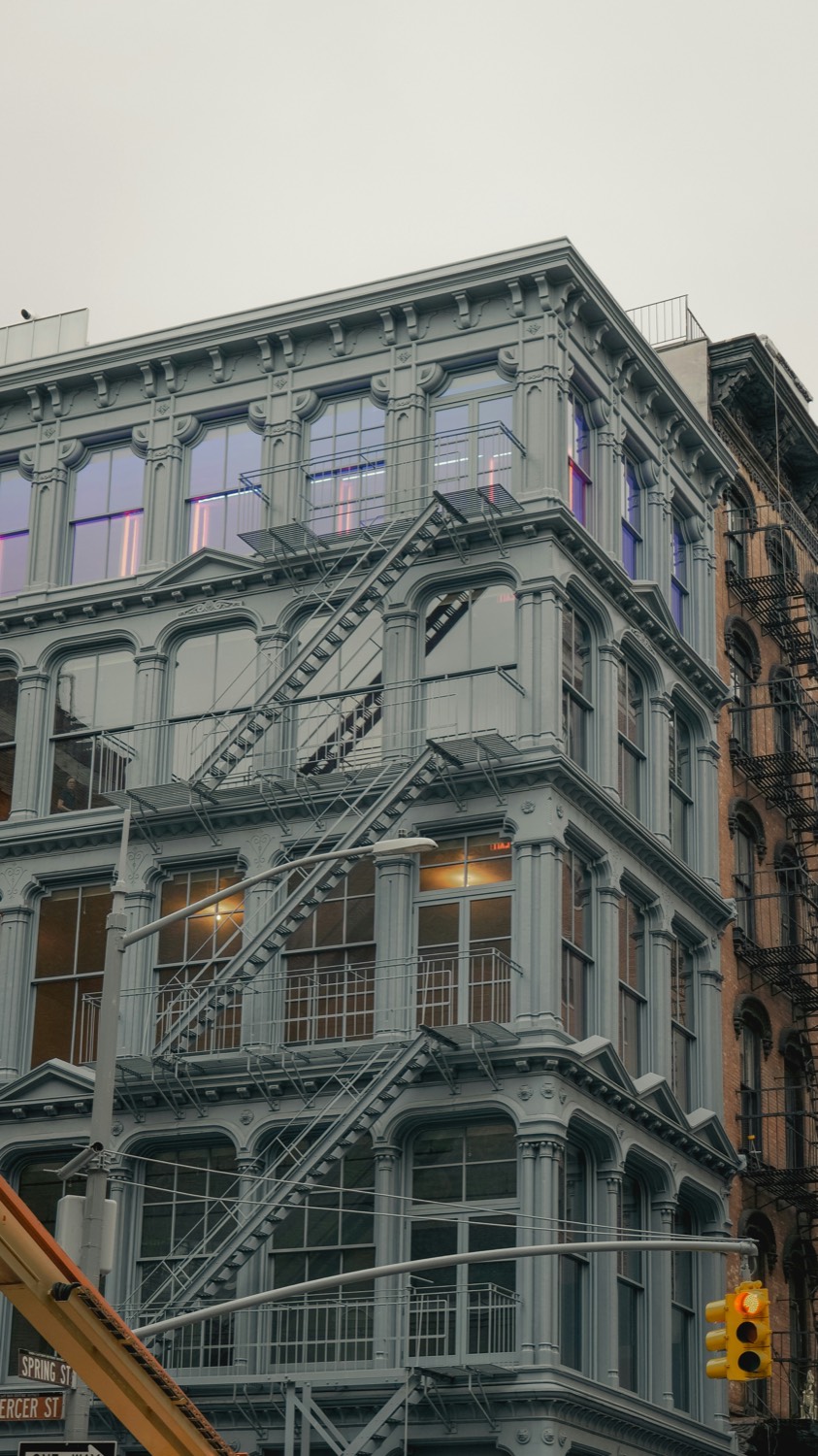
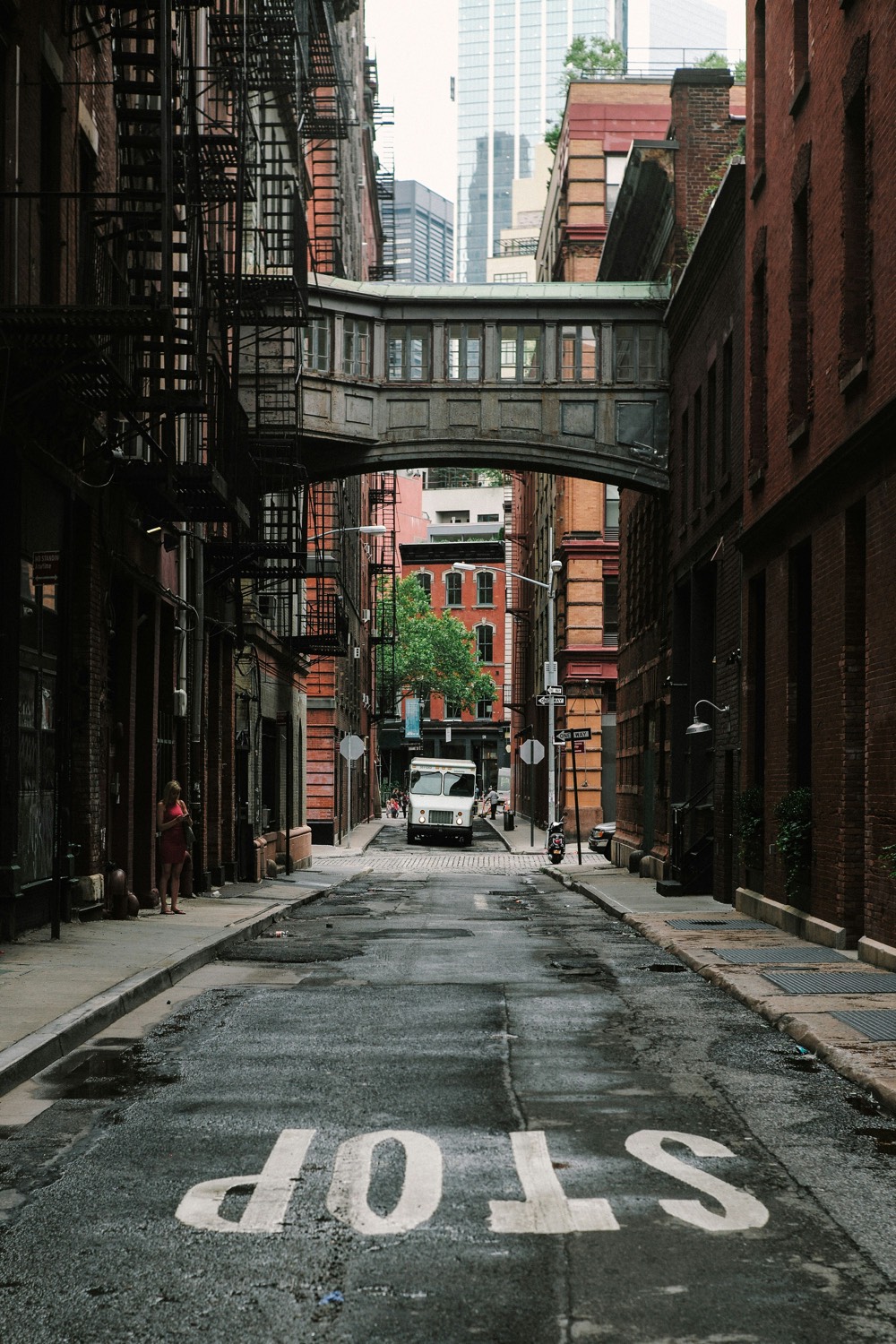
What made Tribeca possible was its architecture. Between roughly 1860 and 1900, builders threw up dozens of cast-iron and brick warehouses along Broadway, White, Walker, and Franklin. The buildings shared a logic: ground floors with cast-iron columns and oversized windows for daylight, upper floors with broad open plans for storing dry goods, butter, eggs, fabric. Ceilings ran twelve to sixteen feet. Floors were thick wood plank built to hold weight.
By the 1960s, the wholesale trades had moved to Hunts Point in the Bronx and to New Jersey warehouses. The buildings sat. Landlords began renting top floors as illegal lofts to artists who wanted what the buildings had always offered: light, space, and silence. The same features that made a Walker Street building good for storing bolts of cotton in 1875 made it a useful painting studio in 1972.
SoHo got there first. The artists who organized the Artists Tenants Association in 1961 — and the city's eventual decision in 1971 to legalize artist live-work in SoHo lofts — established the template. Tribeca was the spillover. By the late seventies, painters, sculptors, dancers, and filmmakers priced out of SoHo were renting on Walker, on White, on Duane.
The Tribeca decade
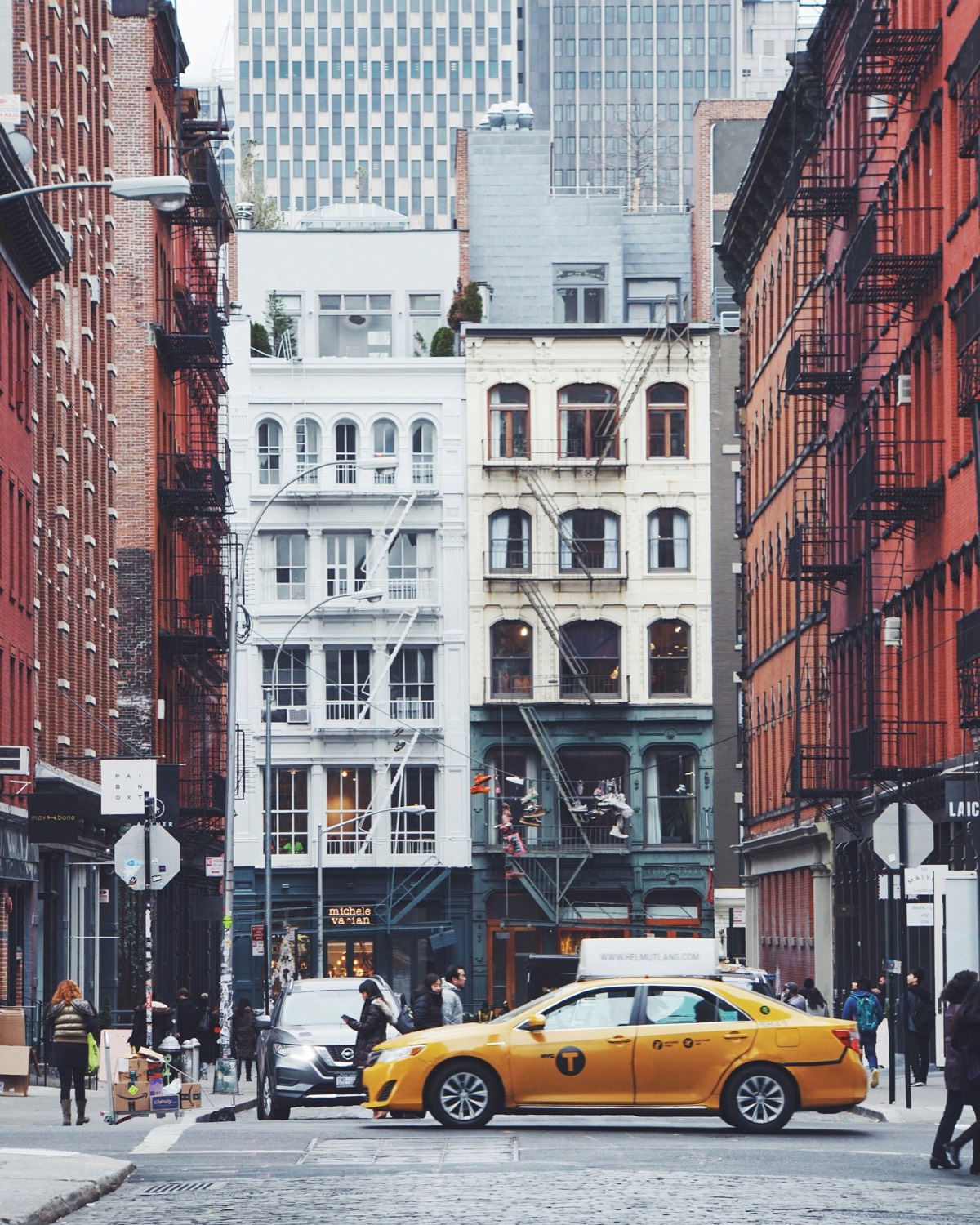
The 1980s were Tribeca's first cultural moment. Artists Space, founded 1972, anchored the non-commercial scene. The Mudd Club operated on White Street from 1978 to 1983, programming punk, no wave, and downtown performance art that drew Basquiat, Madonna, Schnabel. Robert De Niro and Jane Rosenthal would later cite this period as the reason they founded the Tribeca Film Festival here twenty years later — they'd moved into the neighborhood as residents and watched it become something.
Galleries did exist. They were small and they came and went. Hal Bromm Gallery opened on West Broadway in 1975 and is still operating today, now on West Broadway at Franklin — one of the only continuous threads from the artist-loft era to the gallery district that exists now. But for most of the eighties and nineties, contemporary art in New York meant SoHo first, then increasingly Chelsea after Pat Hearn, Matthew Marks, and others moved north in the early nineties.
September and after
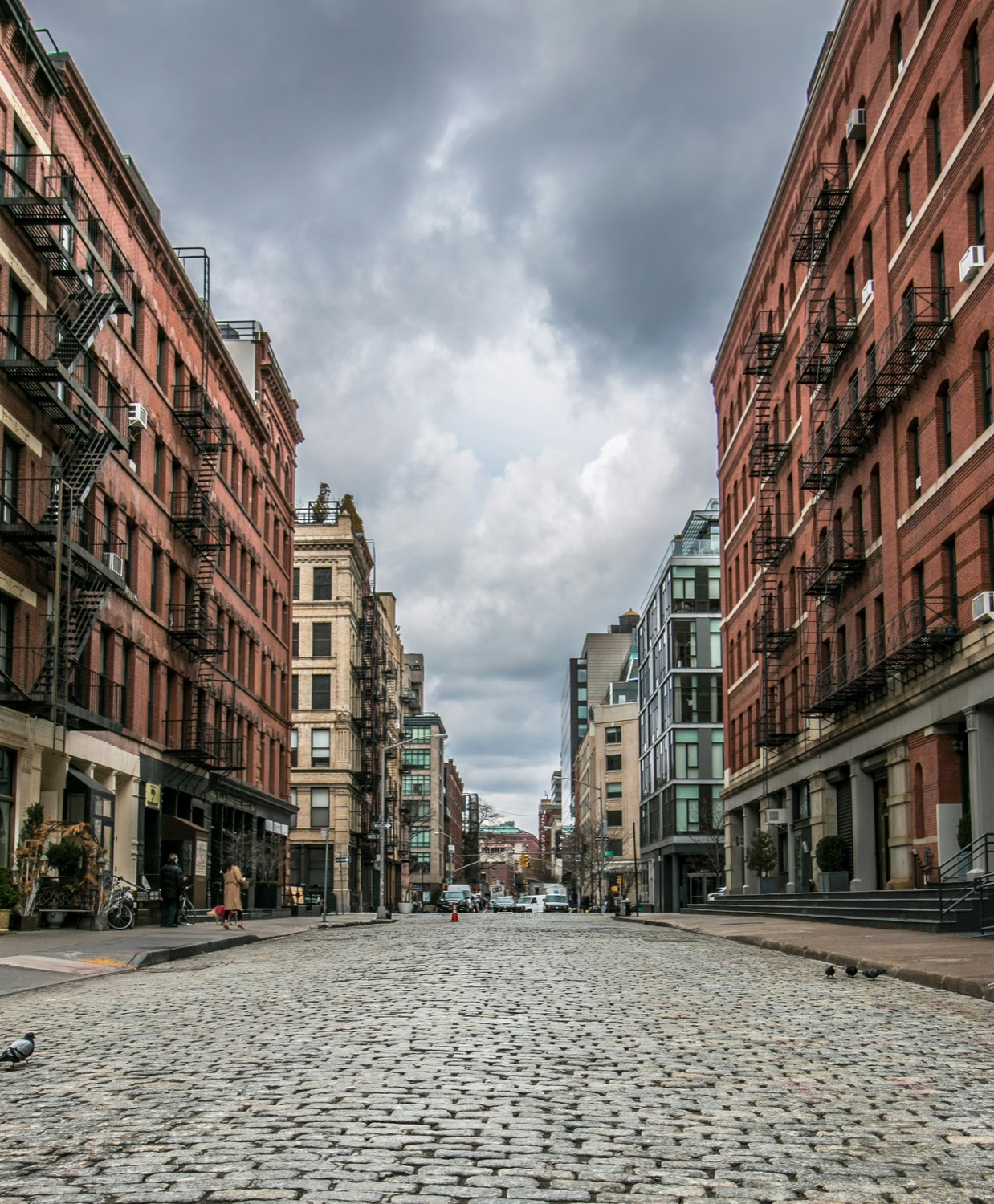
What slowed Tribeca was geography. The neighborhood sits directly north of where the World Trade Center stood. After September 11, 2001, the area was sealed off for weeks. Air quality remained a concern for months. Some galleries that had begun trickling in left. Residential and commercial recovery took years; cultural recovery took longer.
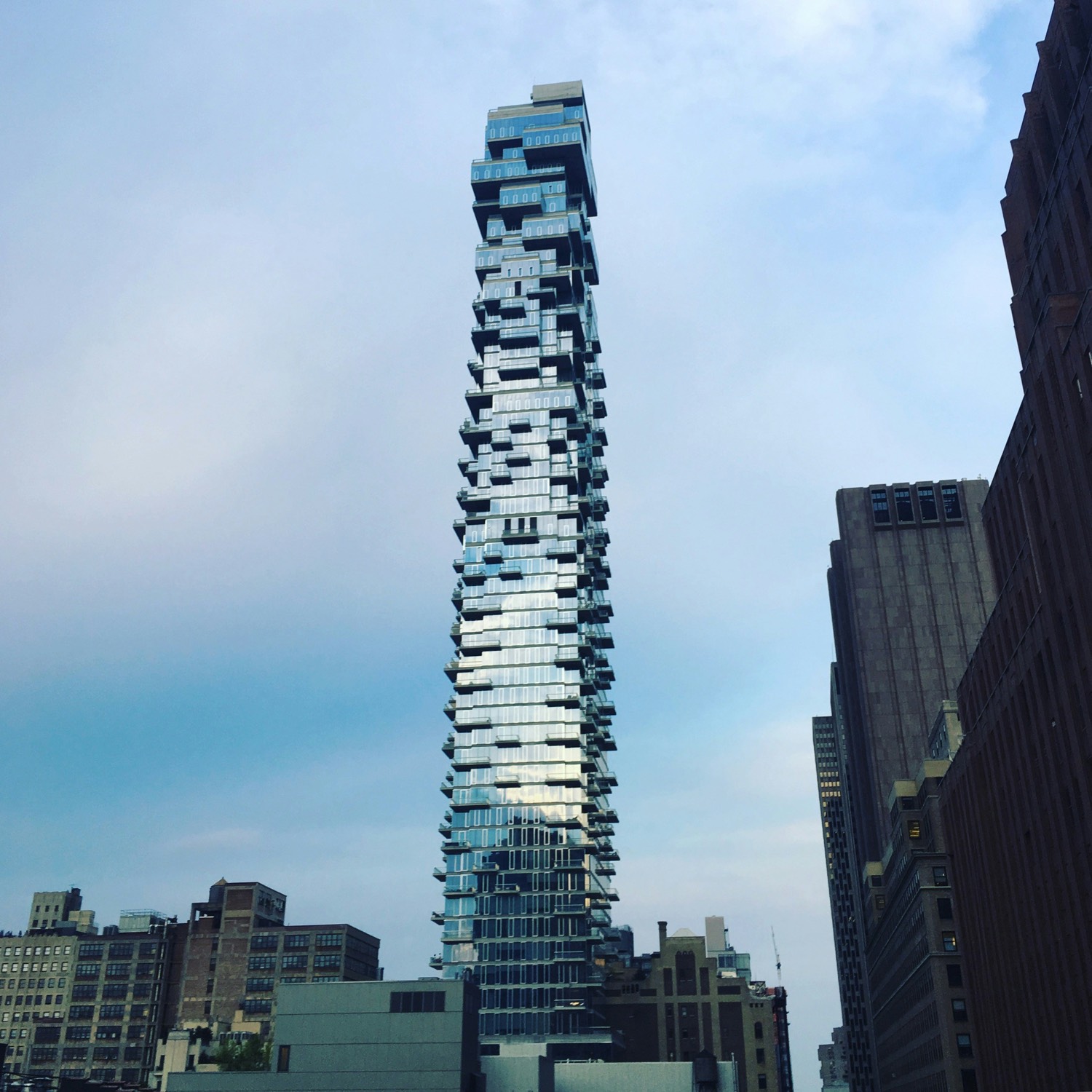
The Tribeca Film Festival, founded in 2002 by De Niro, Rosenthal, and Craig Hatkoff specifically to bring economic life back to Lower Manhattan, was the first major signal that something would return. Cinemas, restaurants, and hotels followed. By the early 2010s the residential rebuild was complete. The cast-iron buildings, which had survived a hundred and fifty years of trade and twenty years of artist tenants, were now condos selling for ten million dollars.
The Chelsea exodus
The story of how Tribeca became the gallery district begins around 2018 and is essentially over. Chelsea — the gallery district from roughly 1995 onward — became too expensive. Hudson Yards opened in 2019 and pushed rents on West 24th and 25th Streets past what most galleries could absorb. The pandemic accelerated everything. Chelsea galleries that had been quietly looking for cheaper space south of Houston had a reason to move.
James Cohan was an early arrival, opening at 48 Walker Street in 2018. Bortolami took 39 Walker the same year. Andrew Kreps took 22 Cortlandt Alley in 2019. P·P·O·W moved from Chelsea to 392 Broadway in 2021. Then the dam broke. Marian Goodman, the gallery that had defined the upper-tier 57th Street market for forty-seven years, announced in early 2023 that she was leaving Midtown for a five-story cast-iron building at 385 Broadway. Jack Shainman moved to the Clock Tower at 46 Lafayette in 2024. Almine Rech, GRIMM, James Fuentes, Anat Ebgi, kaufmann repetto, Ortuzar Projects — all here now, most arriving between 2020 and 2024.
By the spring of 2026, the neighborhood between Canal and Reade, Hudson and Lafayette, contained seventy-seven contemporary galleries in roughly sixteen city blocks — the densest concentration in New York.
Design houses had been quietly establishing themselves the whole time. R & Company, the most influential 20th-century-design dealer in America, has been on White Street since the 2000s. Patrick Parrish, Twenty First Gallery, StudioTwentySeven — all on White, Franklin, or Lispenard, all dealing in furniture and objects with the same seriousness the galleries bring to art.
The cinema, the music venues, the cultural spaces — Roxy Cinema in the cellar of the Roxy Hotel, the Django jazz room beneath it, Saint Tuesday on Cortlandt Alley, the Dream House sound environment La Monte Young has been running on Church Street since 1993, ISLAA on Franklin, Canal Projects, Artists Space — fill the spaces between. They give the neighborhood a texture that pure commercial gallery districts don't have.
What this is now
Walking the district at six PM on a weekday in May 2026, you can see it in the windows: a Mehretu drawing at Marian Goodman, a Lynette Yiadom-Boakye portrait at Jack Shainman, a Marina Rheingantz landscape at Bortolami, a Peter Hujar print at Ortuzar. The cast-iron buildings still have their original storefronts. The Cortlandt Alley wall murals that Banksy painted in 2013 are still there.
The neighborhood didn't plan to become this. It was warehouses, then artists, then nothing for a while, then galleries — each layer leaving traces on the street that the next one couldn't quite cover up. What's here now is the result of a hundred and fifty years of accidents. The fact that you can walk from Hudson to Lafayette and see most of contemporary art is one of them.